





In manufacturing environments, warehouses, and construction sites, restricted areas always pose significant risks related to safety, security, and regulatory compliance. Poor control can lead to workplace accidents, asset loss, or unwanted legal issues. However, traditional methods such as basic surveillance cameras or card-based access control are increasingly showing their limitations.
The advancement of artificial intelligence has introduced a completely new approach, enabling businesses to shift from “observation” to “proactive prevention,” significantly improving safety management efficiency.
What is AI-based restricted area monitoring?
AI-based restricted area monitoring is a system that uses computer vision to analyze camera footage in real time. Unlike traditional cameras that only record data, this system can understand context, recognize people, and detect dangerous behaviors as they occur.
As a result, businesses can quickly identify unauthorized access, safety violations, or situations that may lead to accidents. This represents a major step forward, transforming camera systems from passive recording tools into intelligent monitoring platforms.
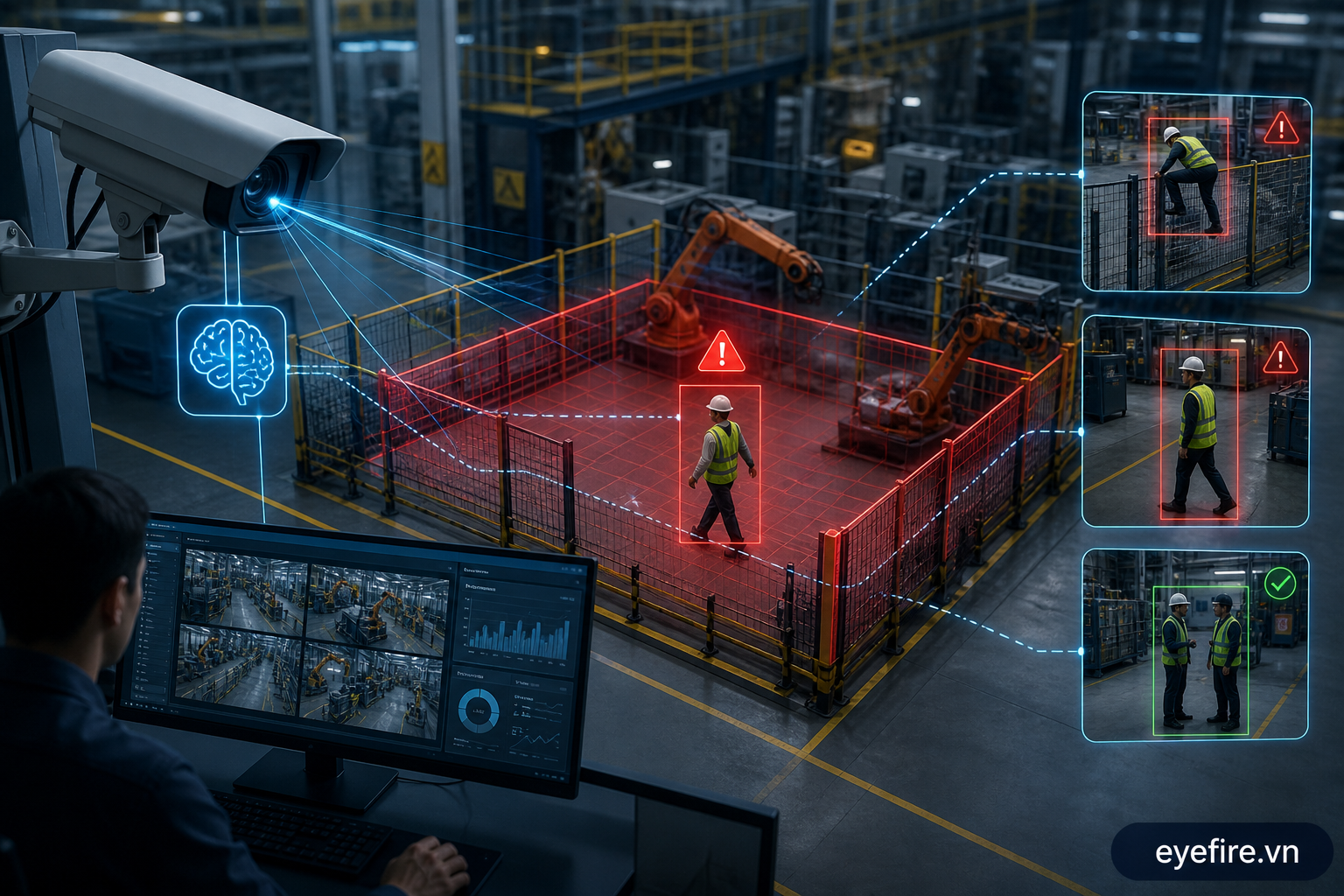
Why do businesses need restricted area monitoring?
In real-world operations, hazardous areas such as robot zones, production lines, or chemical storage facilities require strict control. However, behaviors like tailgating into restricted zones or employees unintentionally entering the wrong areas still occur frequently. These incidents can lead to data leaks, equipment damage, or even threaten human lives.
In addition, workplace accidents remain a major issue in industrial sectors. The primary causes are delayed detection and heavy reliance on manual monitoring. Humans cannot maintain constant attention over long periods, which often results in missing critical warning signs.
Therefore, the need for a monitoring system that operates continuously, detects risks instantly, and supports rapid decision-making has become more urgent than ever.
How does AI work in restricted area monitoring?
Eyefire’s AI monitoring solution leverages existing camera infrastructure and combines it with advanced AI models to create an intelligent protection layer. First, the system allows businesses to define digital monitoring zones with customized access rules for each area. This provides flexibility in identifying hazardous or sensitive zones.
Once configured, the system continuously monitors all movements within these areas 24/7. When unauthorized access or unsafe behavior is detected, AI immediately triggers alerts. These alerts can be delivered through multiple channels such as alarms, email, or internal management systems, enabling rapid response.
In addition, all events are recorded and analyzed. This not only supports investigation but also helps businesses identify risk patterns and improve safety processes over time.
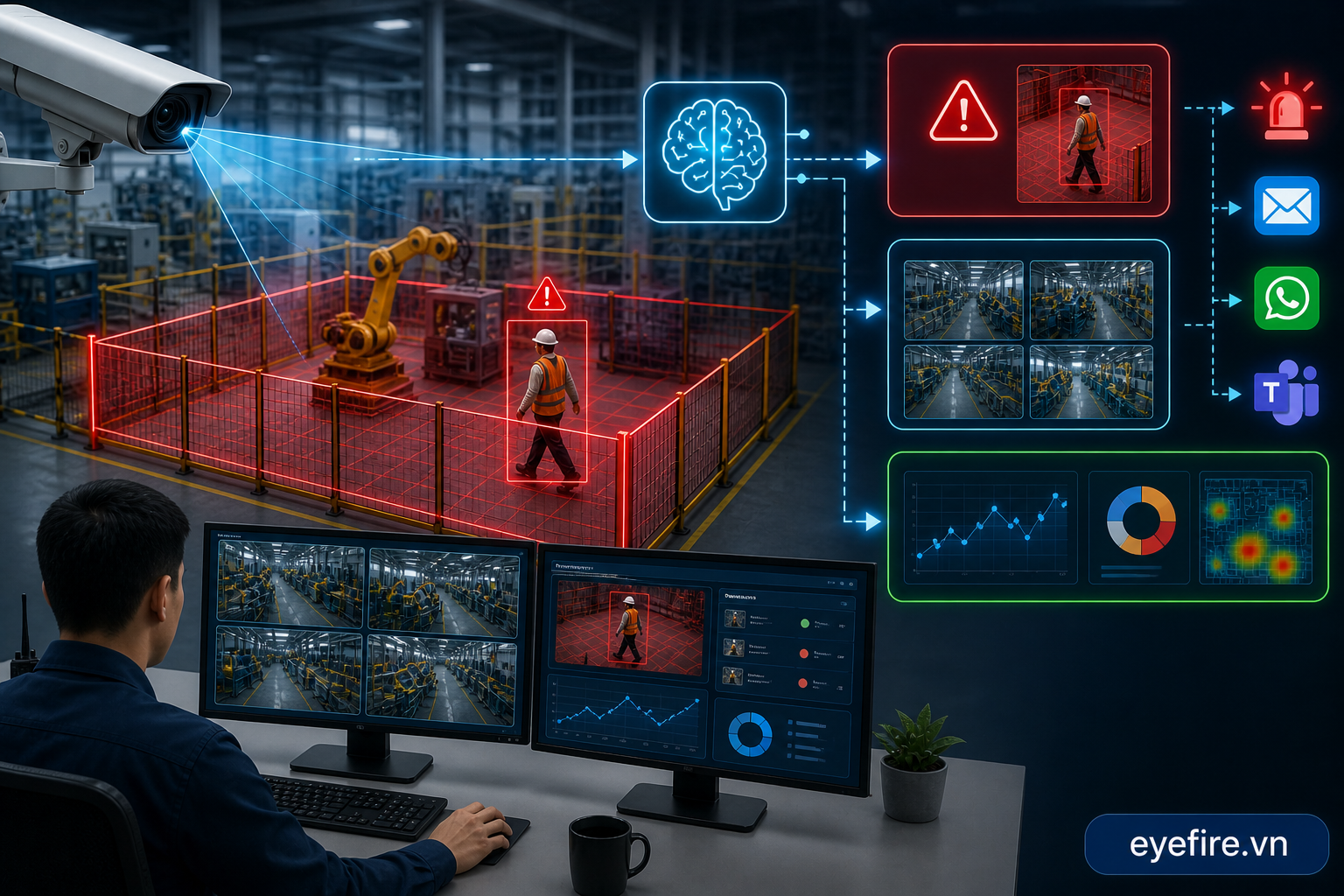
Core modules in an AI Safety system
A comprehensive AI safety monitoring system is typically built from multiple integrated modules. One key capability is personal protective equipment (PPE) detection, which identifies when workers fail to comply with safety requirements, such as not wearing helmets or reflective vests.
The system can also detect unsafe behaviors like climbing over barriers, bypassing safety zones, or standing too close to operating machinery - actions that are often direct causes of workplace accidents.
Another critical component is area monitoring, which detects unauthorized entry into predefined restricted zones. At the same time, the system can track vehicles such as forklifts to reduce the risk of collisions between humans and machines.
All collected data is compiled into reports, giving businesses a clear overview of safety conditions and enabling informed improvements.
Real-world applications across industries
AI-based restricted area monitoring can be applied flexibly across various industries. In manufacturing, it helps control hazardous zones involving robots, presses, or automated production lines. In warehouses and logistics, AI supports forklift monitoring and collision prevention.
In healthcare and pharmaceuticals, controlling access to sterile areas or laboratories is critical, and AI ensures strict enforcement. In retail, the system protects assets and monitors sensitive areas such as server rooms or cash handling zones.
In construction, where hazardous areas frequently change, AI enables flexible setup and monitoring of temporary restricted zones.
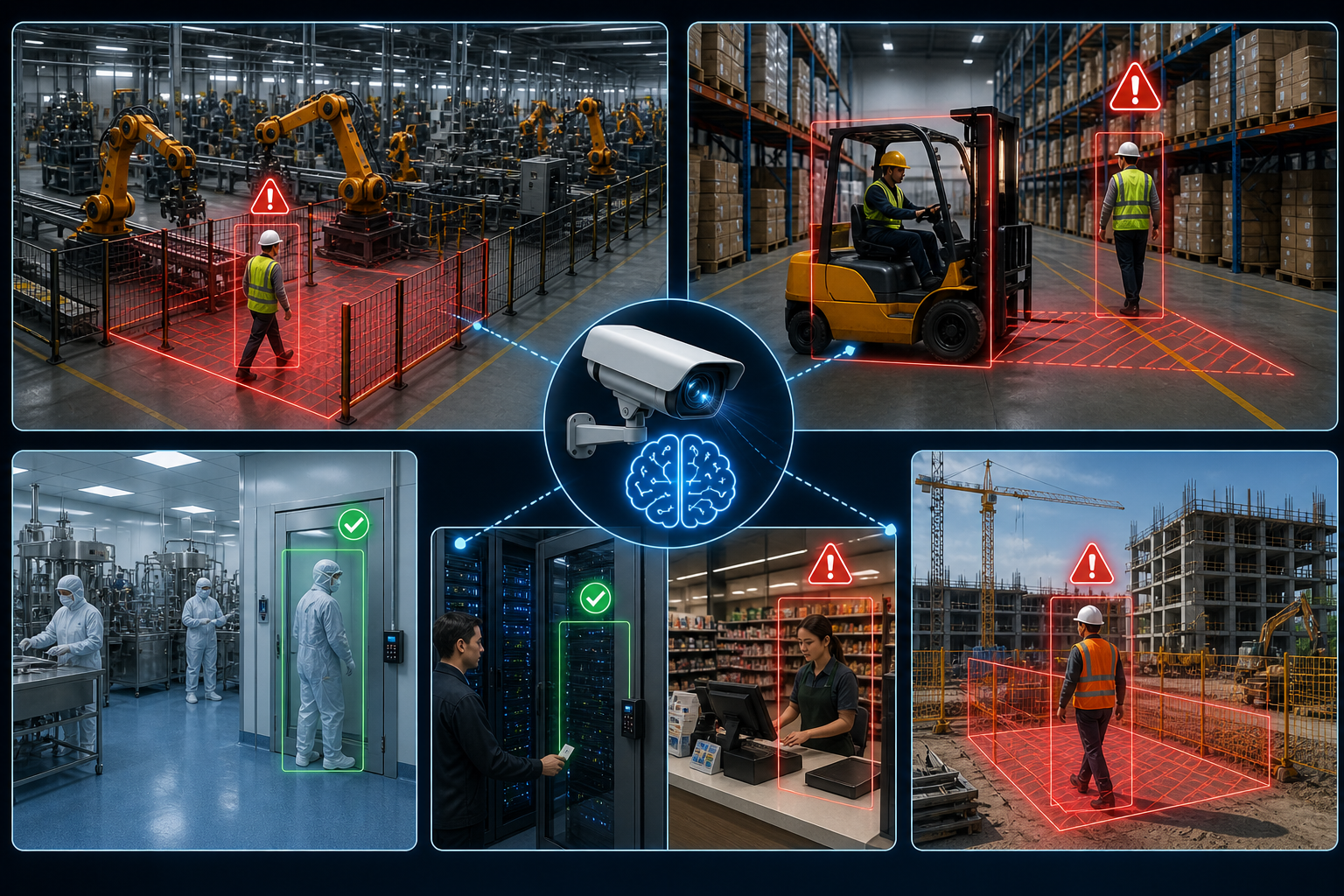
Benefits of implementing AI monitoring
Applying AI in restricted area monitoring brings significant benefits to businesses. First, it greatly reduces workplace accidents by detecting and alerting risks early. At the same time, strict access control helps minimize security violations and protect critical assets.
AI also supports compliance with international safety standards and reduces costs related to compensation and insurance. As the working environment becomes safer, employees feel more secure, contributing to improved productivity and operational efficiency.
More importantly, the system enables businesses to transition from passive monitoring to proactive risk prevention, creating long-term value.
Technology behind the system
These solutions are powered by a combination of advanced technologies such as computer vision, deep learning, and edge computing. AI models can recognize people, analyze posture, and detect behaviors within milliseconds.
Processing data at the edge reduces latency and ensures near-instant responses. At the same time, the system can integrate with IoT platforms or PLCs to trigger automated actions such as stopping machinery or activating alarms.
As a result, the entire process - from detection to response - operates quickly and accurately.
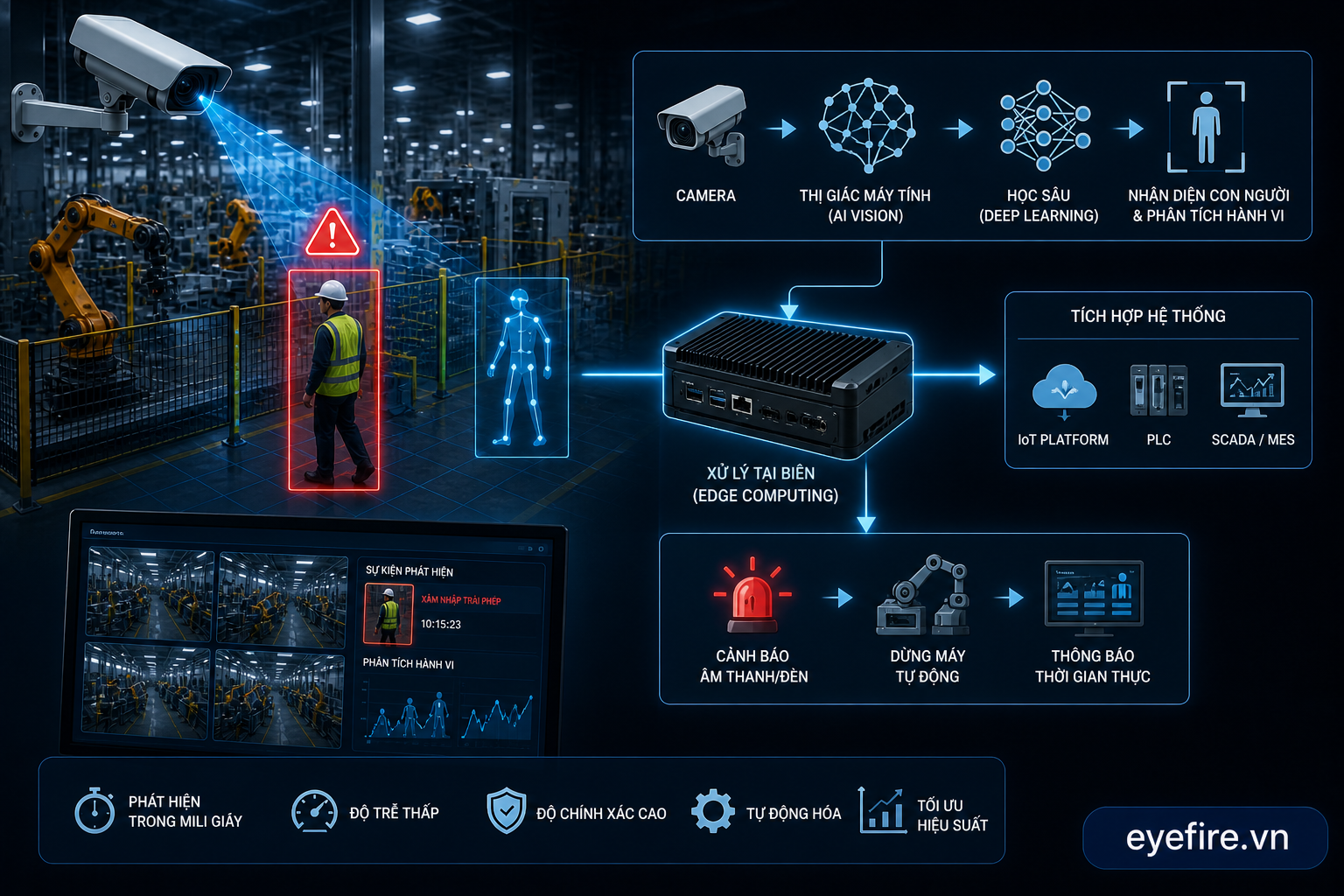
Security and privacy
Ensuring data privacy and security is a critical factor when deploying AI systems. Modern solutions are designed to comply with international standards such as GDPR and SOC 2, ensuring strict data control.
On-premise data processing helps minimize the risk of data leaks while meeting increasingly stringent legal requirements. This is particularly important for industries with high security demands.
Easy deployment with existing infrastructure
One of the key advantages of AI monitoring solutions is their ability to integrate directly with existing camera systems. Businesses do not need to replace their entire infrastructure; they simply connect camera feeds and deploy AI processing systems.
The deployment process is typically fast and supported by technical teams, including zone configuration, alert setup, and operational training. This allows businesses to implement the system without disrupting ongoing operations.
In the context of increasingly modern and complex production environments, ensuring safety can no longer rely solely on human monitoring or traditional surveillance systems. AI-based restricted area monitoring is becoming a new standard, enabling businesses to proactively control risks and improve operational efficiency.
This is not just a technological solution, but a crucial step toward building a safer, smarter, and more sustainable working environment.