





Featured news
Let's take a look at the remarkable news
in the past time from Eyefire
The latest news
EYEFIRE 23/09/2026
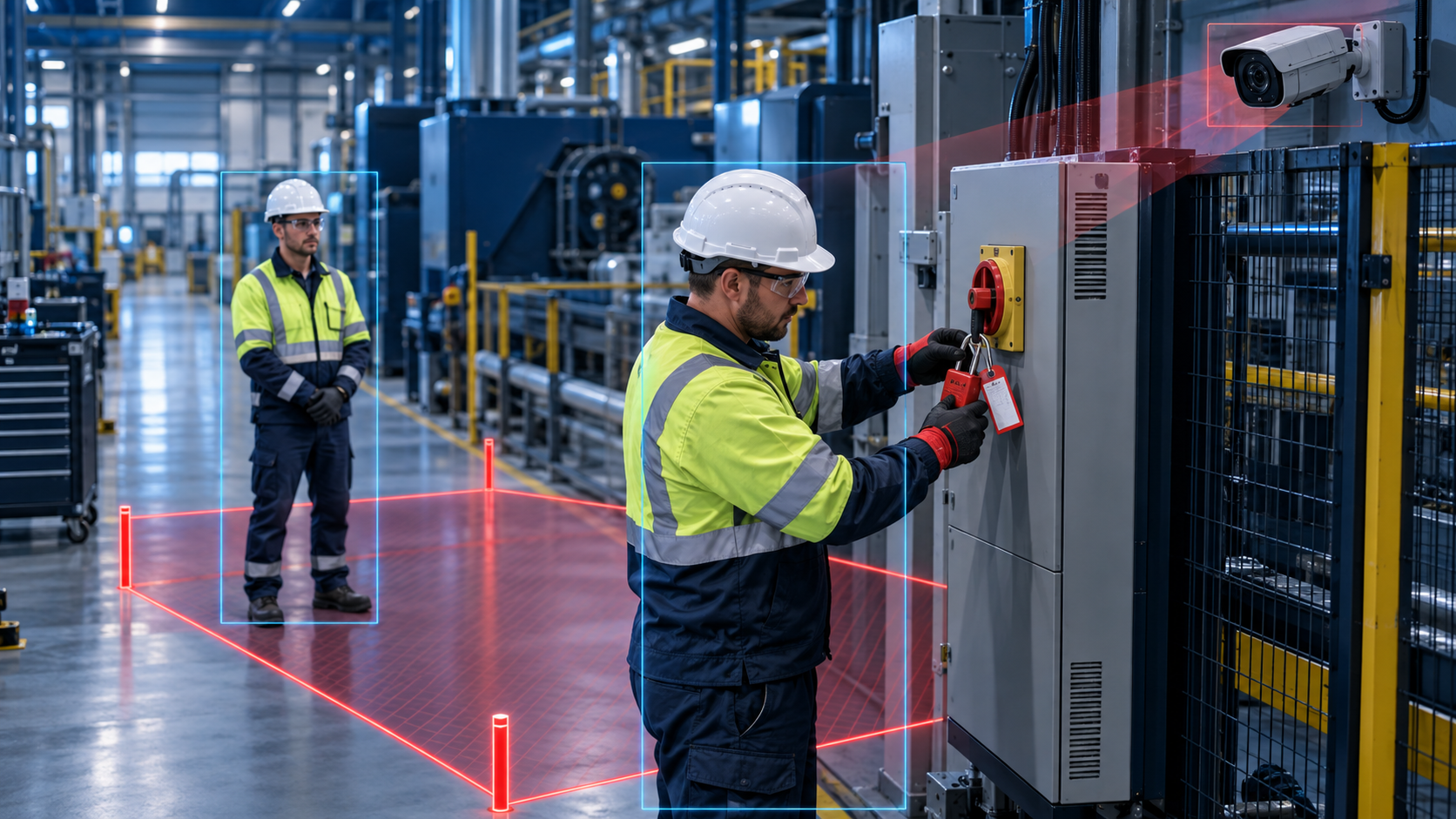
In a factory, a machine stopping does not mean that the risks have disappeared. When a technician reaches inside equipment to clean, repair, or replace components, an unexpected machine startup or the release of stored energy can have serious consequences. Lockout/Tagout (LOTO) was established to prevent such situations. However, the effectiveness of the procedure still depends on whether workers complete every step correctly, maintenance information is communicated promptly, and hazardous areas are continuously controlled. AI Camera can serve as an additional monitoring layer for LOTO. It does not replace physical locks or the responsibilities of authorized personnel, but it can help factories monitor maintenance areas, detect visible deviations, and issue early warnings before risks develop into incidents. WHAT IS LOTO? LOTO is a procedure for controlling hazardous energy before machinery is maintained, repaired, or cleaned. Before work begins, personnel must isolate the energy sources, lock the energy-isolating devices, attach warning tags, and verify that the equipment is in a safe state. Under OSHA Standard 29 CFR 1910.147, the energy sources that need to be controlled may include not only electrical energy but also mechanical, hydraulic, pneumatic, chemical, thermal, and stored energy. The purpose of the procedure is to prevent machinery from starting unexpectedly or releasing energy while workers are operating inside a hazardous area. An incident described by shows how a risk can begin with a seemingly ordinary action. When maintenance work was divided into separate tasks to meet the schedule, another person noticed that the main circuit breaker was switched off and turned it back on without receiving any warning that someone was repairing the machine. The core problem was not limited to the act of switching the power back on. It also involved the maintenance status not being recognized and communicated to the right person at the right time. GAPS IN LOTO CONTROL A complete LOTO program normally includes written procedures, lockout and tagout devices, personnel training, authorization, and periodic inspections. However, gaps may still exist between the established procedures and what actually takes place at the worksite. Work permits and checklists only indicate which steps workers confirmed at the time of recording. They do not fully reflect whether the maintenance area remained in the correct state throughout the entire work period. Supervisors cannot stand beside every machine for hours to maintain continuous observation. A lock may be removed too early, someone may enter the wrong area, or a person may interact with the control panel between two inspections. The external condition of equipment can also be misleading. A machine that is not operating may not have been fully isolated from its energy sources. Similarly, an unlit control panel does not mean that electricity, pressure, or stored energy has been eliminated. Employees from another shift, contractors, or visitors may also be unaware that a production line is under maintenance. Signs and barriers remain necessary, but their effectiveness depends on each person’s attention and safety awareness. HOW DOES AI CAMERA SUPPORT LOTO CONTROL? AI Camera analyzes camera footage in real time to identify people, objects, areas, and certain observable conditions. When the visual data does not comply with established safety rules, the system can issue an alert and retain evidence of the event. Depending on site conditions, AI Camera can support LOTO in three main areas: controlling maintenance zones, monitoring visible equipment indicators, and detecting unauthorized personnel. 1. IDENTIFYING AND CONTROLLING MAINTENANCE AREAS Managers can define virtual zones directly on camera footage, such as areas surrounding production lines, conveyors, electrical cabinets, or machine rooms. Different rules can be applied to each zone according to whether the equipment is in production or under maintenance. With area control capabilities, the system can detect people entering restricted areas, monitor the number of people present, and limit the amount of time they remain within a zone. These capabilities can be configured to support the monitoring of LOTO worksites. When a maintenance work order begins, the relevant area can be switched to a dedicated monitoring mode. Depending on the factory’s infrastructure, this status change can be performed manually or through integration with a maintenance management system. In this mode, the system can apply predefined conditions such as the permitted number of people, authorized working hours, and personal protective equipment requirements. If someone appears in the area without a valid maintenance activity or the number of people exceeds the established limit, the system issues an alert. AI Camera can also record when someone enters, exits, or remains in an area for too long. This information helps supervisors identify cases in which work continues for an unusually long time, a worker has not left the hazardous zone, or the work permit has expired. 2. MONITORING VISIBLE INDICATORS OF LOCKS, TAGS, AND EQUIPMENT This area requires careful assessment before implementation. Not every camera or type of lock, tag, and energy-isolating device can be accurately recognized from the outset. If the camera angle, resolution, lighting, and equipment appearance are suitable, a computer vision model can be configured or trained to monitor indicators such as: * The presence of a lock or tag at the specified location; * Whether the electrical cabinet door is open or closed; * Whether an indicator light is on or off; * Whether a valve handle or lever is in the predefined position; * Whether a lock or tag has been removed while people remain in the area. When a deviation is detected, the system can store an image or video together with the time and camera location. This data helps supervisors review the event, investigate its cause, and supplement the evidence used in safety assessments. However, a camera can only verify what is visible in the image. Visual observation alone cannot establish that every energy source has been isolated, all pressure has been released, or the equipment contains no stored energy. Zero-energy verification, startup testing, and confirmation that the equipment is safe must still be performed by trained and authorized personnel in accordance with the factory’s procedures. 3. DETECTING UNAUTHORIZED PERSONNEL ENTERING HAZARDOUS AREAS A person who is unaware that equipment is under maintenance may enter the work area or interact with its controls. AI Camera helps detect this situation as soon as it occurs, rather than waiting for a supervisor to review the footage later. When someone crosses a virtual boundary, the system can issue an on-site warning or send a notification to the EHS department, maintenance team, and person responsible for the area. The alert may include an image so that the recipient can quickly assess the situation. Rules can also be configured according to time. For example, personnel may be allowed inside the area during maintenance, but the area must be completely empty before the machine is returned to operation. When integrated with personnel data or work permits, the system can support the distinction between assigned workers and unauthorized individuals. The integration must clearly define the data source, identification method, and procedure for handling inconsistencies between systems. EYEFIRE has facial recognition technology that can operate on servers, edge devices, or mobile devices. Before using it in a factory, the company needs to assess its suitability, access control policies, and personal data protection requirements. Facial recognition is not the only option. Depending on site conditions, the factory may use employee cards, work codes, uniforms, or simply monitor the presence of people in an area without identifying them. AI Camera can also check certain types of PPE, such as helmets, gloves, or masks, according to the rules defined for the area. If a worker enters the maintenance area without the required protective equipment, the system issues an alert. AN ILLUSTRATIVE OPERATING SCENARIO Suppose a technical team needs to perform maintenance on a packaging line. AI Camera can support the process as follows: 1. The maintenance team opens a work order and completes the energy isolation steps required by the LOTO procedure. The virtual zone surrounding the production line is switched to maintenance mode. 2. Technicians attach locks and tags at the energy isolation points. If the site has been assessed and the recognition model has been configured appropriately, the camera can visually verify the presence of locks or tags at the designated locations. 3. The camera monitors the number of people in the area, working duration, and PPE use. When someone who is not involved in the work enters, the system issues an on-site warning and sends an image to the supervisor. 4. The supervisor reviews and handles the event before confirming the result. Images, alert times, and responses are stored for subsequent review. 5. After maintenance is completed, an authorized person verifies the zero-energy state, confirms the equipment’s condition, and removes the locks in the correct sequence. AI Camera can issue an alert if someone remains in the area, but it does not independently decide whether energy should be restored. This scenario demonstrates that AI does not perform LOTO on behalf of workers. The technology adds another layer of observation to detect visible deviations at the worksite as early as possible. FROM ALERTS TO A CLOSED-LOOP RESPONSE PROCESS An alert only has value when someone receives and handles it at the right time. For this reason, deploying AI Camera for LOTO should not stop at detecting people or objects. The company must determine which events require an on-site warning, which cases should be reported to EHS or maintenance management, and who is responsible for verification. Response times, work-stoppage conditions, and methods for recording outcomes should also be clearly defined. The system should allow responsible personnel to classify alerts as valid, false, or related to an authorized situation. This feedback provides a basis for adjusting monitoring zones, detection thresholds, and AI models according to actual operating conditions. CAN EXISTING CAMERAS BE USED? EYEFIRE Safety is designed to analyze footage from existing camera systems and support multiple safety rules on the same infrastructure. The solution supports on-premise and cloud service deployment, as well as edge processing with EYEFIRE Hub. However, the ability to use existing cameras does not mean that every camera position will meet the requirements of a LOTO application. A camera that provides an overview of the production line may be suitable for intrusion detection but may not be clear enough to identify a small lock on an electrical cabinet. An actual project may require two layers of observation: wide-angle cameras for monitoring people and areas, and close-up cameras at isolation points for monitoring locks, tags, or equipment states. The assessment should consider resolution, lighting, obstructions, distance, and connectivity at each location. AI CAMERA DOES NOT REPLACE PHYSICAL LOCKS OR LOTO PROCEDURES Locks, tags, energy-isolating devices, and energy control procedures remain the primary safeguards. AI Camera cannot keep a circuit breaker in the off position, release pressure from a pipeline, or prevent mechanical energy from being released. The system also does not replace written procedures, training, energy source identification, lock and tag placement, or zero-energy verification. Decisions about whether maintenance may begin or equipment may be returned to operation must remain with trained and authorized personnel. The appropriate role of AI Camera is to serve as a second layer of verification. The technology supports continuous observation, early warnings, and visual evidence when a behavior or condition does not comply with established rules. CONCLUSION LOTO is effective only when every step is completed and maintained throughout the maintenance process. A missing lock, a person entering the wrong area, or energy being restored too early can reduce the effectiveness of the entire procedure. AI Camera adds continuous observation capabilities to LOTO through maintenance area control, people counting, and PPE monitoring,
Công nghệ 16/09/2026
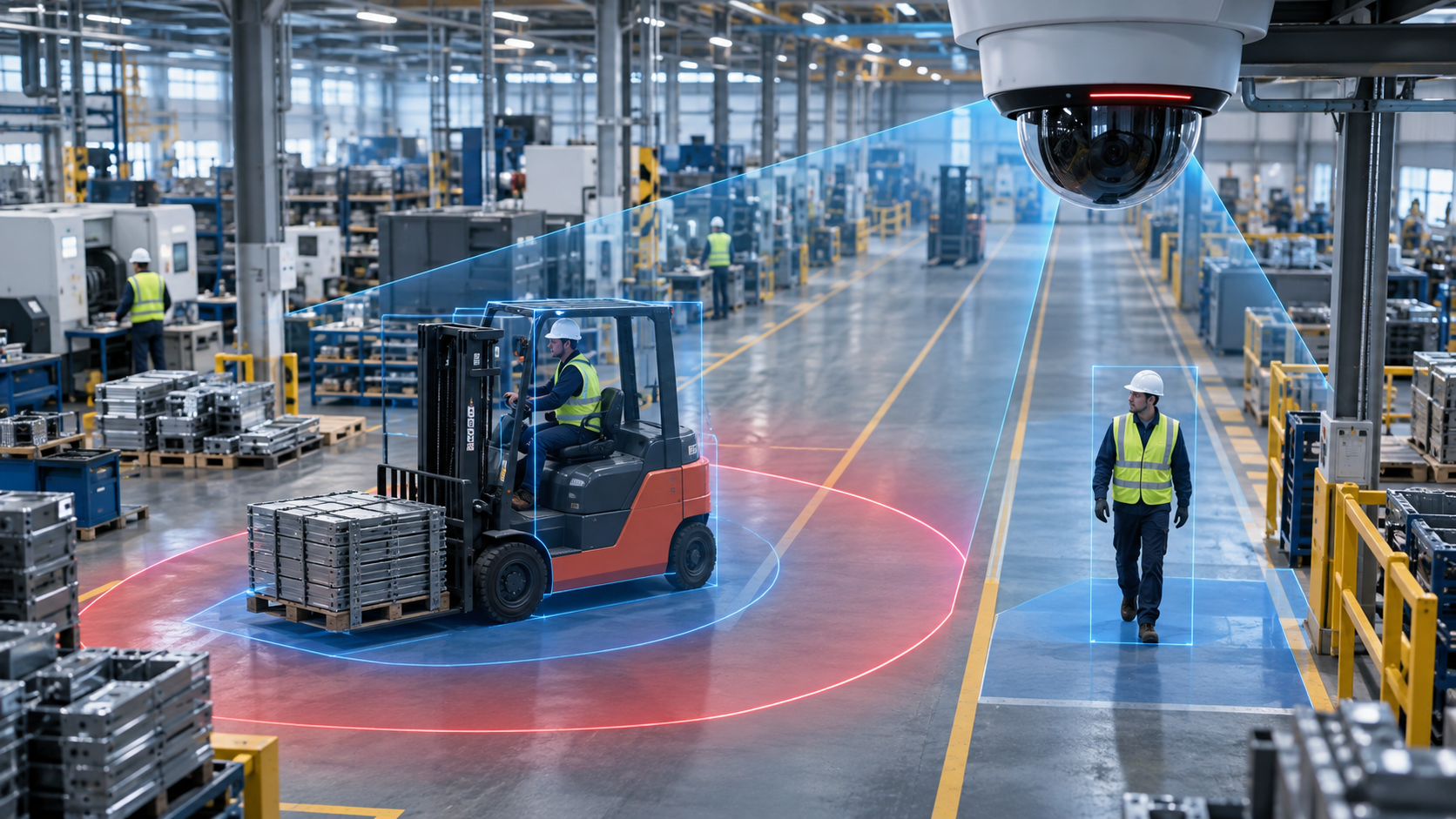
Workplace accidents not only harm workers’ health but also lead to compensation costs, production downtime, equipment damage, and resources spent on incident investigations. However, when evaluating an AI Camera system, businesses cannot rely solely on the general claim that it is “safer”; they need to determine the measurable financial value it can deliver. ROI helps businesses compare the total benefits generated with the full cost of implementation over a defined period. The result provides a basis for deciding whether to run a pilot, expand the system to additional areas, or adjust its configuration. WHAT IS THE ROI OF AN AI CAMERA SAFETY SYSTEM? ROI, or return on investment, represents the financial benefit a business receives relative to the amount it has invested. The basic formula is: ROI (%) = (Total benefits – Total costs) / Total costs × 100% If a business invests VND 600 million and generates VND 840 million in benefits during the first year, ROI is calculated as follows: ROI = (840 – 600) / 600 × 100% = 40% This means that, in addition to recovering the initial investment, the business generates additional value equal to 40% of the amount invested. Businesses should also track the payback period: Payback period = Total investment cost / Average monthly benefit The two metrics should be used together. ROI indicates overall effectiveness, while the payback period helps determine when the investment begins to generate net value. STEP 1: IDENTIFY THE FULL COST OF IMPLEMENTATION A common error when calculating ROI is to include only the cost of purchasing cameras or AI software. In practice, the total cost of ownership needs to cover both the initial investment and the cost of maintaining the system. Initial investment costs Depending on the existing infrastructure and the scope of implementation, these costs may include: * AI Cameras or new IP cameras; * An AI Processing Hub and Edge AI devices; * Servers, storage devices, and network infrastructure; * Warning lights, sirens, monitors, or display boards; * Installation and monitoring-zone configuration costs; * AI model training or fine-tuning; * Integration with CCTV, VMS, management software, or control systems; * Operator training. If existing cameras meet the requirements for image quality, viewing angle, and connectivity, businesses may be able to reuse part of their infrastructure. However, an on-site assessment is necessary rather than assuming that every existing camera is suitable for an AI application. Annual operating costs Once the system is in use, it may incur software licensing fees, equipment maintenance costs, data storage expenses, technical support fees, and AI model update costs. Businesses also need to account for the staff time required to receive, verify, and process alerts. The general formula can be expressed as follows: Total costs = Initial investment costs + Operating costs + Additional internal costs Including all costs from the outset helps prevent an estimated ROI from appearing high while failing to reflect the true total cost of ownership. STEP 2: DETERMINE CURRENT SAFETY-RELATED COSTS To understand how much value an AI Camera system can generate, a business needs to establish a baseline before implementation. Data should be collected over a period of 6–12 months and should focus on the specific areas where the system will be installed. The data to be collected includes the number of accidents, near-miss incidents, PPE violations, hazardous-zone intrusions, forklift speeding events, and the average response time. Businesses should also record equipment downtime, the time spent investigating incidents, equipment damage, and the resources currently used for manual monitoring. The cost of an incident is not limited to expenses supported by invoices. OSHA’s Safety Pays tool distinguishes between direct and indirect costs when assessing the impact of workplace accidents on a business. Direct costs Direct costs may include first aid, medical treatment, compensation, machinery repairs, replacement of damaged goods, and site response expenses. Indirect costs These costs are more easily overlooked and may include: * Production line downtime; * Output lost while an incident is being handled; * Time spent by managers and the EHS team; * Incident investigation, documentation, and camera footage retrieval; * Training or arranging replacement personnel; * Delivery delays; * Effects on reputation and relationships with business partners. The HSE also notes that effective safety practices can help businesses reduce costs, risks, employee absence, accidents, and the threat of legal action while supporting productivity. STEP 3: CONVERT THE BENEFITS OF AI CAMERAS INTO FINANCIAL VALUE AI safety cameras can detect people entering hazardous zones, PPE violations, speeding vehicles, and collision risks. For example,, save images, and send real-time alerts. It can also establish to detect people approaching while the equipment is operating. Financial benefits can be divided into four groups. Avoided incident costs This value is calculated by multiplying the reduction in accidents or incidents after implementation by the average cost of each type of incident. Avoided costs = Reduction in the number of incidents × Average cost per incident Businesses should not take the entire historical cost of accidents and assume that an AI Camera system will eliminate it completely. Comparisons need to cover the same area, the same type of risk, and equivalent periods. Reduced production downtime costs If early warnings help prevent collisions, restricted-area intrusions, or obstructions in aisles, businesses may be able to reduce the number of hours of disruption. Value of reduced downtime = Reduction in downtime hours × Production downtime cost per hour The hourly cost should be calculated based on lost output, idle labor, restart costs, and effects on delivery schedules. Time saved on monitoring and investigation Traditional cameras generally provide only video footage for people to review. AI Cameras can automatically detect, classify, and store events, helping EHS teams spend less time watching screens or searching for relevant footage. Value of time saved = Number of hours saved × Personnel cost per hour Only the time that is genuinely freed up and redirected to other activities should be counted. The entire salary of safety personnel should not be treated as savings. Reduced equipment and goods damage Collisions involving forklifts, pedestrians, storage racks, and pallets can damage vehicles, goods, or facilities. When AI Cameras help detect blind spots and provide real-time risk alerts, businesses can compare repair costs before and after implementation. EXAMPLE OF HOW TO CALCULATE ROI Suppose a factory deploys AI Cameras at an intersection shared by forklifts and pedestrians. The figures below are intended solely to illustrate the calculation method and do not constitute a quotation or a performance commitment. Total first-year costs Item Cost Cameras, AI Hub, and warning devices VND 300 million Installation, configuration, and integration VND 140 million Training and internal operations VND 40 million First-year licensing, maintenance, and support VND 120 million Total costs VND 600 million Benefits recorded over 12 months Source of benefit Value Avoided accident and incident costs VND 320 million Value of reduced production downtime VND 210 millio Time saved on monitoring and investigations VND 180 million Reduced equipment and goods damage VND 130 million Total benefits VND 840 million Therefore: ROI = (840 – 600) / 600 × 100% = 40% Payback period = 600 / (840 / 12) = approximately 8.6 months From the ninth month onward, the system begins to generate net value if the benefits continue to be sustained. ROI SHOULD NOT BE MEASURED SOLELY BY THE NUMBER OF ACCIDENTS Serious accidents occur infrequently but can have major consequences. If a business waits only for a reduction in accident numbers, it may take a long time to collect enough data to determine effectiveness. During the initial stage, businesses should also monitor leading indicators such as: * The number of near-miss events detected; * The number of hazardous-zone intrusions; * The frequency of PPE violations; * The number of vehicle speeding events; * The time from detection to resolution; * The rates of valid and false alerts; * The rate of repeated violations in the same area; * The number of hours saved on monitoring or video retrieval. These indicators show whether the system helps detect risks early and change safety behavior. Once sufficient data has been accumulated, businesses can convert the results into avoided costs. HOW CAN ROI RESULTS BE MADE MORE RELIABLE? Before implementation, businesses need to agree on the measurement scope, comparison period, and data sources. Before-and-after results must be measured in the same area, during the same shifts, and at comparable production levels. Businesses should also develop three scenarios: conservative, base, and expected. Each scenario should use different assumptions for reductions in incidents, time savings, and operating costs. This approach allows decision-makers to see the potential range of outcomes rather than relying on a single figure. Double-counting benefits must also be avoided. If production downtime is already included in the total cost of an accident, it should not be added again as a separate benefit. Benefits that are difficult to convert into financial terms, such as corporate image, safety culture, or employee trust, may be recorded separately but should not be assigned an arbitrary monetary value. START WITH A SCOPE THAT IS SMALL ENOUGH TO MEASURE Instead of deploying the system across the entire factory at once, a business can begin in an area with a clearly identified risk, such as a forklift intersection, a robot operating zone, an area beneath an overhead crane, or a location where PPE violations occur frequently. A pilot project should have baseline data, specific objectives, and acceptance criteria from the outset. After a period of operation, the business can evaluate accuracy, alert speed, reductions in violations, and financial benefits before deciding whether to expand the system. CONCLUSION The ROI of an AI Camera safety system does not come only from reducing the number of accidents. Its value also lies in detecting risks early, shortening response times, reducing production disruptions, and providing data to improve safety processes. To obtain reliable results, businesses need to calculate the full total cost of ownership, establish baseline data, and record only benefits that can be verified. When deployed for the right use case and measured consistently, an AI Camera system is no longer merely a preventive investment; it becomes a tool that supports risk management and optimizes factory operations.
EYEFIRE 11/09/2026
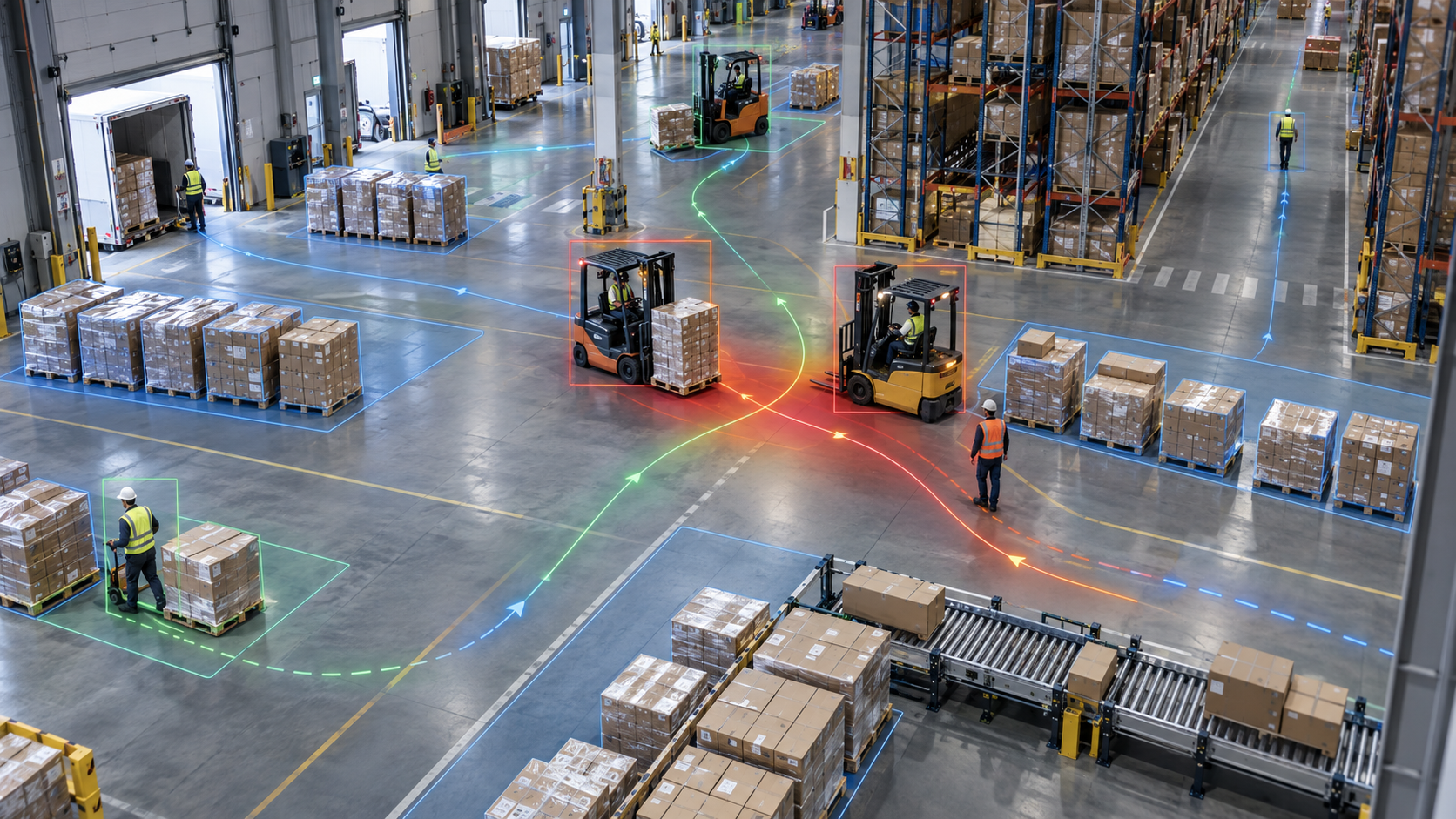
A delayed warehouse dispatch may be recorded in the management system. However, this data often cannot explain where the time was lost: a forklift may have had to wait at an intersection, pallets may have remained in the staging area for too long, or a blocked aisle may have forced workers to take a detour. This is the gap AI cameras can help address. Instead of using cameras only to review incidents, businesses can analyze footage from their existing CCTV systems to identify recurring patterns of congestion, waiting, and deviations from expected movement flows inside the warehouse. A WAREHOUSE BOTTLENECK IS MORE THAN A SINGLE DELAY A forklift stopping for several minutes at an intersection is not enough to conclude that the area has a problem. A bottleneck is usually a recurring pattern: queues repeatedly form at the same location, dwell time in a staging area consistently exceeds the expected threshold, or productivity declines during a particular time window. Some warning signs include: * Pallets or goods remain in the staging area for too long. * Forklifts frequently have to queue at warehouse doors or intersections. * Aisles are obstructed, forcing people and vehicles to change direction. * Dock-door turnover takes longer than planned. * Goods flows become imbalanced between different areas or work shifts. * Equipment remains idle while a nearby area is continuously overloaded. * Vehicles repeatedly deviate from their designated routes. The purpose of the analysis is not to determine whether an individual moves quickly or slowly, but to understand how the overall process operates within each area. This approach helps businesses focus on improving layouts, schedules, and coordination methods instead of assigning blame based on an isolated video clip. WHY ARE WMS OR TMS DATA NOT ENOUGH TO IDENTIFY THE CAUSE? WMS, TMS, and YMS platforms can record when a barcode is scanned, a process step is completed, a vehicle arrives at a dock door, or an order leaves the warehouse. This enables businesses to measure actual processing times and identify stages that fail to meet their KPIs. However, many physical activities between two system events are not recorded. A forklift may have to wait for a clear route, a pallet may be placed in the wrong location, or two workflows may need to use the same aisle at the same time. The system only shows that total processing time has increased, without revealing how much time was consumed by each contributing factor. When operational data is combined with camera footage, the picture becomes more complete. The management system answers the question, “Which stage is running slowly?”, while AI cameras provide the context needed to investigate, “What is happening there?” HOW DO AI CAMERAS ANALYZE BOTTLENECKS? AI cameras can be configured to observe a specific zone within a camera’s field of view, such as an entrance, exit, intersection, aisle, or goods handoff point. From the captured footage, the system analyzes signals including the number of objects in the zone, dwell time, movement direction, density, and the frequency of congestion. The results should be aggregated by area and time rather than based on a single event. When an abnormal pattern repeatedly appears across representative shifts, the business has a stronger basis for narrowing down possible causes and selecting an improvement measure. AI cameras do not replace WMS platforms or other existing management systems. Their value lies in adding a visual data layer for physical activities that forms, barcode scans, and system timestamps cannot fully represent. A FIVE-STEP PROCESS FOR FINDING BOTTLENECKS USING EXISTING CCTV STEP 1: SELECT ONE PROCESS AND ONE METRIC TO IMPROVE Businesses should begin with a limited scope, such as turnaround time at a cluster of receiving doors, the number of pallets staged per hour, or travel time along a main route. A clearly defined metric makes the analysis results measurable and verifiable. STEP 2: CHECK THE CAMERA’S FIELD OF VIEW The camera needs a clear view of the area related to the metric being monitored. If the objective is to measure travel time through an aisle, the entry and exit points must fall within an analyzable field of view. Blind spots caused by shelving, lighting conditions, parked vehicles, or the camera’s installation angle must also be checked. A business does not need to deploy the solution across the entire warehouse from the outset. Starting with one to three high-impact areas is a practical way to validate feasibility and standardize the measurement method. STEP 3: ESTABLISH A BASELINE ACROSS MULTIPLE SHIFTS Data should be collected over a sufficiently representative period, covering regular shifts, peak hours, and days with different levels of activity. A baseline helps distinguish a random incident from a systematic bottleneck. Possible metrics include average dwell time, travel time through an area, number of queue occurrences, congestion duration, and hourly throughput. STEP 4: COMPARE THE INTENDED FLOW WITH ACTUAL MOVEMENT The business compares the designed route and processing rhythm with the movement data observed by the cameras. If forklifts frequently detour around the same location, several goods flows converge during the same time window, or the staging area repeatedly reaches capacity before the end of a shift, these are signs that require investigation. AI camera results can indicate factors that may be contributing to the delay, but a correlation should not immediately be treated as the sole cause. Production plans, workforce availability, equipment condition, and data from management systems should also be considered. STEP 5: TEST ONE CHANGE AND MEASURE IT AGAIN USING THE SAME METRIC After forming a hypothesis, the business should test a clearly scoped change, such as adjusting replenishment schedules, relocating a staging area, changing the direction of traffic, or separating the operating times of two workflows. The results should then be measured using the same metric and camera coverage used to establish the baseline. A lower frequency of congestion, shorter queues, and reduced travel time are signals that the measure is working. Nearby areas should also be checked to ensure that the bottleneck has not merely shifted to another location. AREAS THAT SHOULD BE PRIORITIZED FOR ANALYSIS RECEIVING AND DISPATCH DOORS Queues involving trucks, forklifts, and loading personnel can easily develop in these areas. AI cameras can support the analysis of door occupancy time, waiting periods, and situations in which multiple vehicles gather at the same location. STAGING AREAS Dwell time exceeding the expected threshold may indicate that the next process is not ready, the staging area lacks sufficient capacity, or replenishment activities overlap with outbound staging. INTERSECTIONS AND MAIN AISLES Converging routes do not only affect productivity; they can also increase the risk of collisions between forklifts, pedestrians, and other vehicles. Analyzing density, waiting time, and movement direction helps businesses reconsider lane markings, signs, movement schedules, and route design. HANDOFF POINTS BETWEEN PROCESS STAGES At pick-to-pack, pack-to-stage, or stage-to-dispatch handoff points, one process may have to wait for input from the previous stage. Dwell time and the rate at which goods move through these handoff points can reveal imbalances between adjacent processes. COORDINATION AND DISPATCH AREAS Comparing the rate at which goods leave the staging area with the rate at which they are loaded for dispatch helps businesses identify periods when outbound capacity cannot keep pace with warehouse output. EXAMPLE: CONGESTION IN A STAGING-AREA AISLE Suppose staging productivity regularly decreases between 1:00 p.m. and 3:00 p.m. System data confirms that the number of pallets processed per hour falls below the target, but it does not reveal why. Analysis of footage from the aisle entrance and the adjacent intersection shows that forklifts frequently have to detour around an obstructed point. During the same period, replenishment and outbound staging activities use the same aisle. This overlap provides a reasonable hypothesis that needs to be tested. The business could move the replenishment schedule by 30 minutes and then compare throughput, travel time, and congestion frequency again. If goods flow improves without creating a new bottleneck, the change can be standardized or applied to similar areas. OPTIMIZING EFFICIENCY WITHOUT SEPARATING IT FROM SAFETY Bottlenecks and safety risks often arise in the same locations. Busy intersections, obstructed aisles, and overloaded staging areas increase waiting time while also reducing safe clearance and visibility. Businesses should therefore avoid focusing only on increasing movement speed. A change should be considered effective when it improves throughput while maintaining the separation of people and vehicles, safe distances, escape routes, and visibility within the area. With its Vision AI platform, EyeFire helps businesses use cameras as a source of operational data: monitoring defined areas, detecting events according to configured conditions, and aggregating information for assessment. Depending on the existing infrastructure and actual use case, the solution can be configured for priority areas without requiring the entire camera system to be replaced from the beginning. POINTS TO CONSIDER BEFORE DEPLOYMENT Analysis quality depends on the viewing angle, lighting, occlusion, and stability of the video stream. Businesses need to survey the existing camera system to determine which cameras can be reused, which need to be repositioned, and where additional equipment may be required. Alongside technical requirements, the purpose of data processing, retention scope, access rights, and privacy policies must be clearly defined. Analysis should focus on area-level trends and process improvement, rather than turning the system into a tool for evaluating individuals without sufficient context. TURNING CAMERAS FROM REVIEW TOOLS INTO OPERATIONAL IMPROVEMENT DATA Warehouse bottlenecks do not always appear in reports. Many minutes of waiting occur between barcode scans, at intersections, inside aisles, and at handoff points that operational systems cannot observe. By combining operational metrics with CCTV data, businesses can identify patterns of delay, validate possible causes, and measure the effectiveness of each change. A suitable approach is to start with one important workflow, one trusted metric, and a few high-impact camera zones, then expand based on actual results. EyeFire helps businesses gradually upgrade their existing surveillance systems into tools for proactive management, supporting safer and more efficient warehouse environments.