





AI Camera or Passive Infrared (PIR) Sensor: Which is the more effective solution for hazardous-area intrusion warnings?
In factories and logistics facilities, detecting intrusion into hazardous areas - around operating machinery, high-voltage zones, conveyor systems, or lifting equipment - is a fundamental requirement of occupational safety systems. Passive Infrared (PIR) sensors have long been a popular choice due to their low cost, while AI Cameras powered by computer vision are increasingly being considered by businesses. This article compares the two technologies to help businesses choose the most suitable solution.
How Does a Passive Infrared (PIR) Sensor Work?
PIR (Passive Infrared) is a passive sensor that detects movement based on differences in infrared radiation between the human body and the surrounding environment. When a person moves through the sensor's detection area, this thermal difference causes the sensor to generate an electrical signal, triggering an alarm or a machine-stop command.
The advantages of PIR sensors include their simple structure, low power consumption, low investment cost, and ability to operate in low-light conditions without requiring additional illumination.
What Are the Limitations of PIR Sensors in Factories?
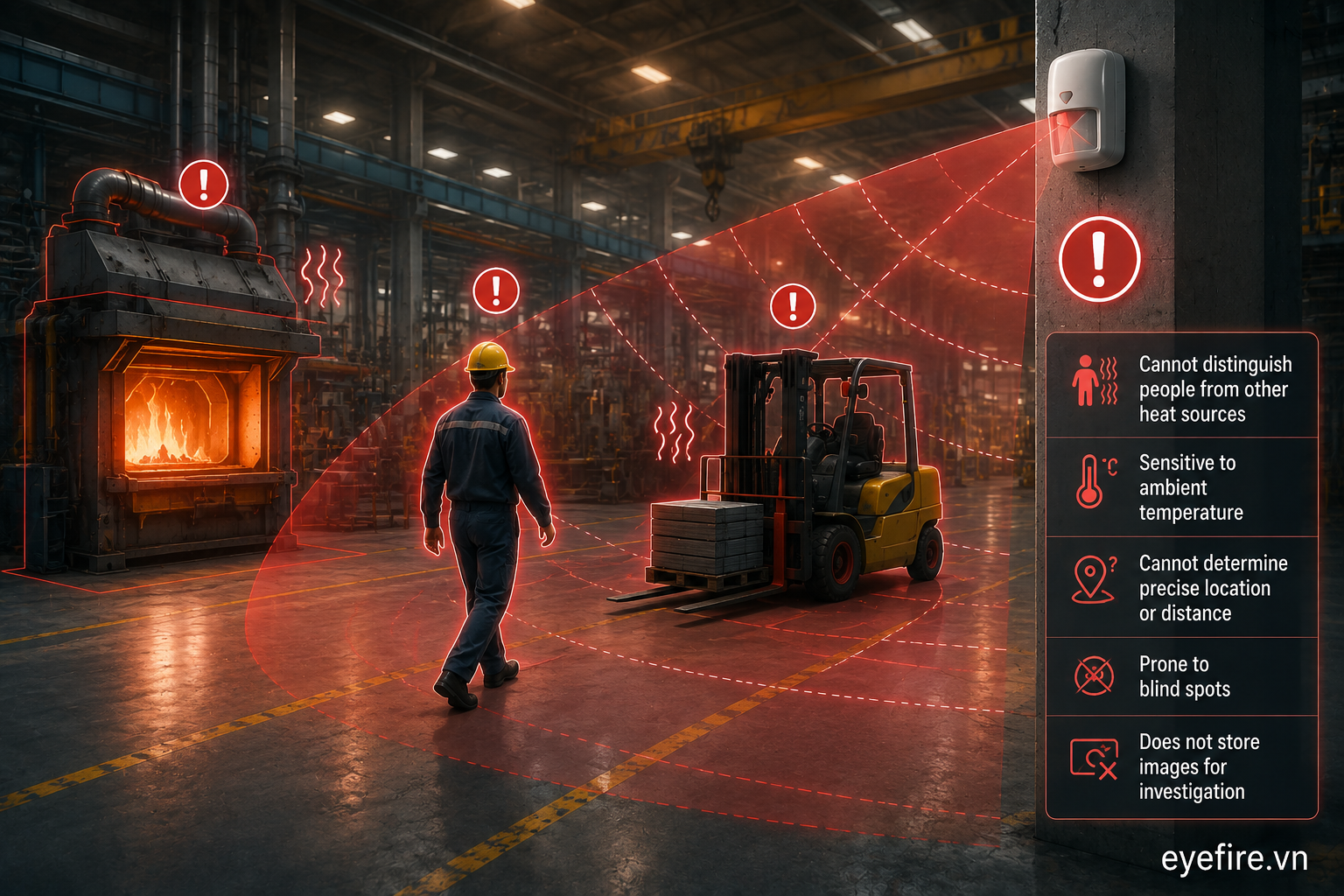
PIR sensors have difficulty distinguishing people from other heat sources, are susceptible to environmental temperature changes, cannot determine precise locations, and do not capture images for verification.
Cannot Distinguish People from Other Heat Sources
PIR detects differences in heat rather than analyzing the shape of an object. In factories with furnaces, forklifts, or heat-emitting equipment, these sources may cause false alarms or result in actual events being missed.
Sensitive to Ambient Temperature
When the ambient temperature approaches human body temperature, or when an area is exposed to direct sunlight, the thermal difference between a person and the background becomes less distinct, reducing detection accuracy.
Cannot Determine Precise Locations
PIR can only determine whether there is movement within its detection area. It cannot identify a person's exact location, direction of movement, or distance from a hazardous zone. In areas that require multiple warning levels, or where hazardous zones change according to equipment movement, such as around overhead cranes, PIR sensors are difficult to apply effectively.
Prone to Blind Spots
Each sensor has a limited detection angle and range. To cover a large or complex-shaped area, businesses need to install multiple sensors, increasing both equipment costs and calibration efforts.
Cannot Store Images for Investigation
When a PIR sensor triggers an alarm, the system only records that "movement was detected" without providing actual images. This makes it difficult for HSE teams to verify alerts or analyze incidents.
How Does an AI Camera Detect Intrusion into Hazardous Areas?
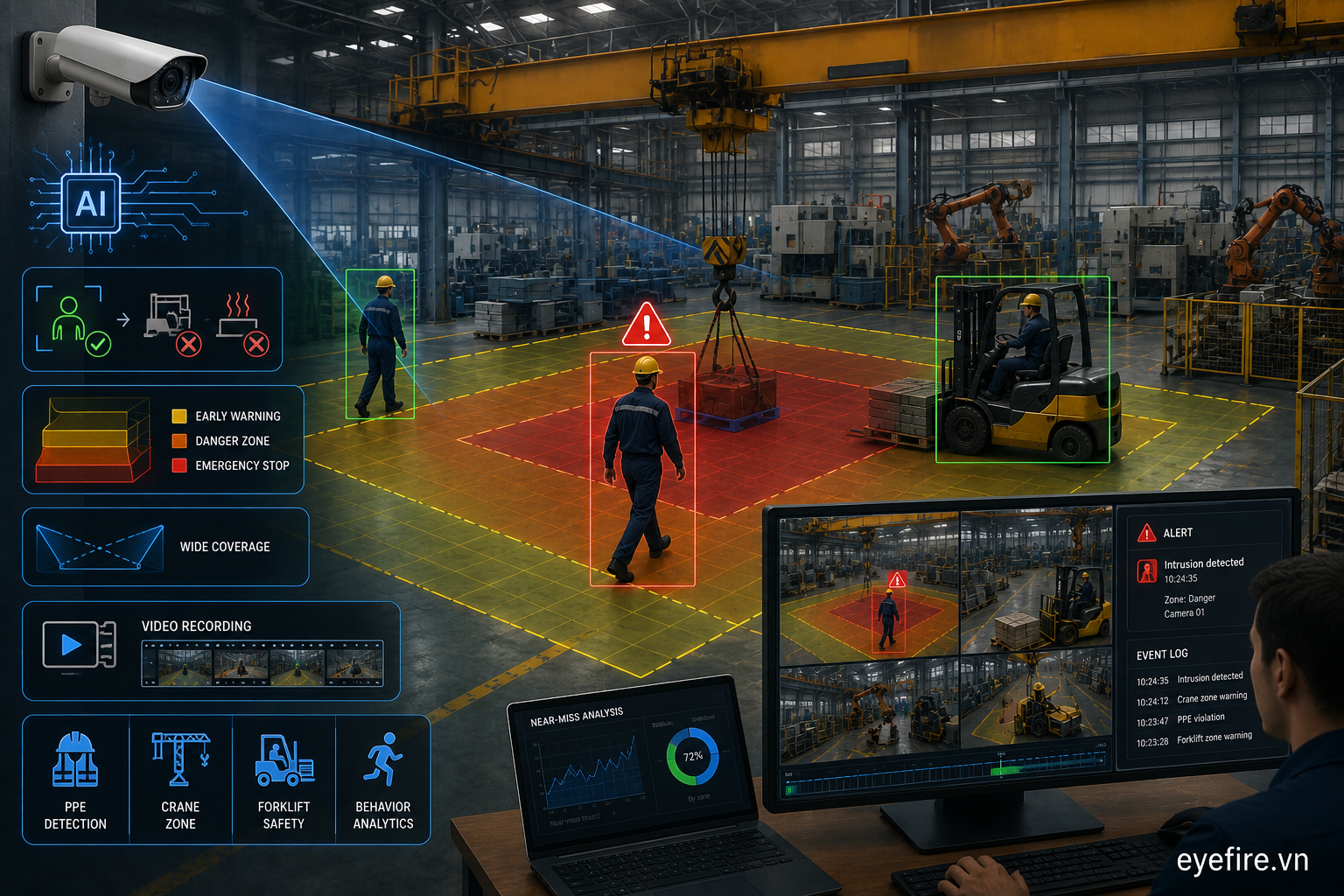
AI Cameras use Computer Vision to analyze images in real time, accurately detect people, determine their locations, and compare those locations with predefined warning zones, rather than simply detecting generic movement signals.
Distinguishes People from Objects and Other Heat Sources
By analyzing object shapes and visual characteristics, AI Cameras can distinguish people from equipment or heat-emitting materials, significantly reducing false alarms compared with PIR sensors.
Determines Location and Supports Multiple Warning Zones
AI Cameras can define multiple warning zones—such as an early-warning zone, hazardous zone, and emergency-stop zone—within the same field of view. In areas where hazardous zones change dynamically, such as beneath a moving overhead crane, the system can also dynamically adjust warning zones according to the equipment's position.
Wider Monitoring Coverage
A wide-angle camera can cover a significantly larger area than a single PIR sensor, helping reduce the number of devices required and minimizing the risk of blind spots.
Stores Images for Verification and Investigation
Each alert can be accompanied by an image or video recording of the detection event, providing valuable data for HSE teams to verify incidents and analyze near-misses over time.
One Platform for Multiple Use Cases
The same camera infrastructure can be expanded to support PPE monitoring, detection of people in hazardous areas around overhead cranes and forklifts, or abnormal behavior detection without requiring a separate system for each use case.
Does AI Camera Technology Have Any Limitations?
AI Camera performance depends on lighting conditions, installation angles, and typically requires a higher initial investment than PIR sensors.
In extremely dark or dusty environments, infrared (IR) cameras or additional lighting may be required to maintain sufficient image quality. If a person is completely obstructed by a large object and is outside the camera's field of view, the system cannot detect them until they become visible. In addition, the initial investment—including cameras and AI processing infrastructure—is generally higher than that of a single PIR sensor, although the actual cost per monitoring point should be evaluated based on coverage area and system scalability.
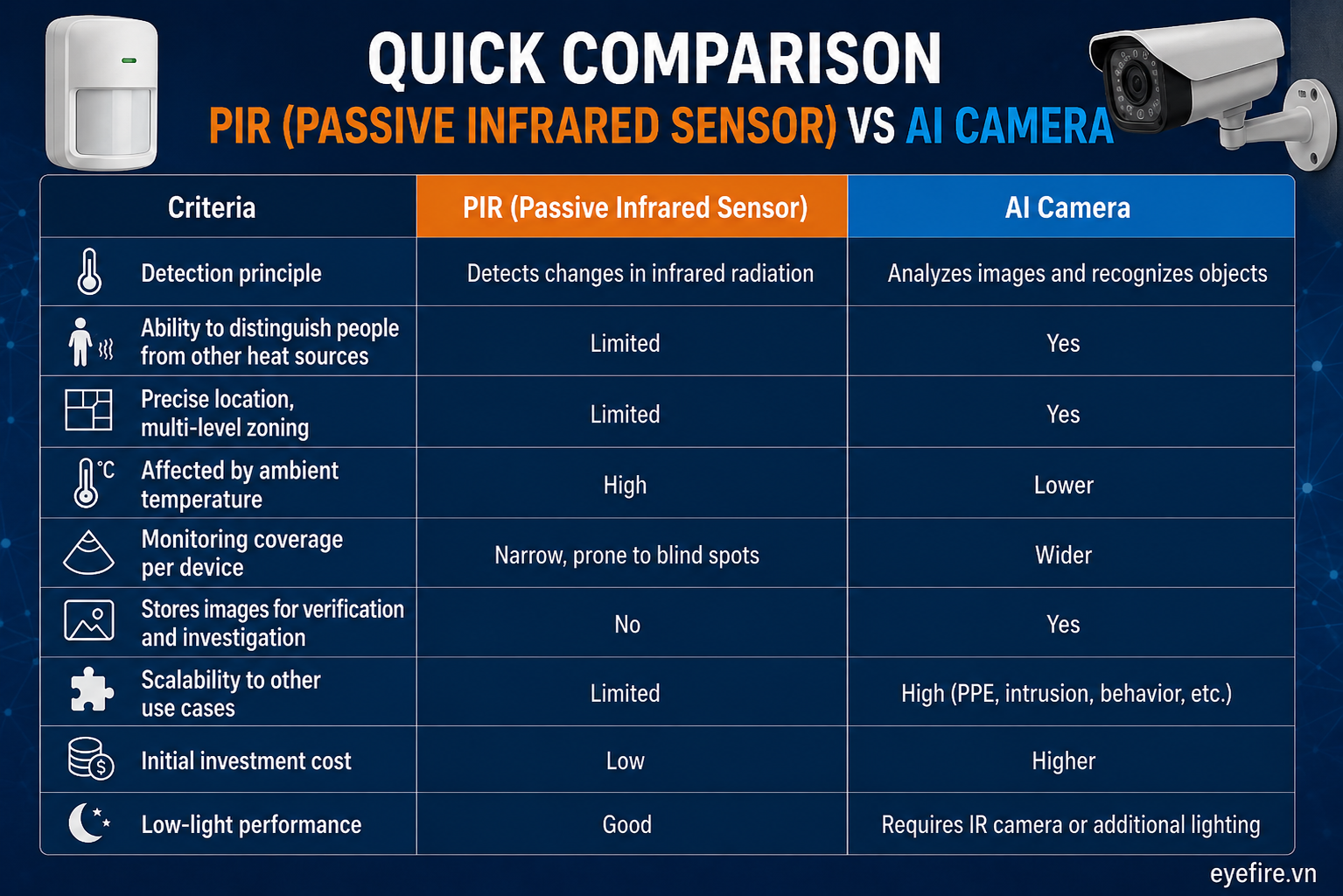
Quick Comparison of Passive Infrared (PIR) Sensors and AI Cameras
Where Should Each Technology Be Applied in a Factory?
PIR is suitable for: secondary walkways, warehouse doors, low-traffic areas, and locations where the only requirement is to determine whether "someone is present" and the investment budget is limited.
AI Camera is suitable for: stamping machines, cutting machines, industrial robots, overhead cranes, and forklifts - areas where hazardous zones involve multiple risk levels, frequently change position, or where businesses require visual data for incident investigation and HSE reporting.
For factories with different types of equipment and varying levels of risk, combining both technologies according to the requirements of each area often provides better investment efficiency than relying on a single solution throughout the entire facility.
So, Should Businesses Choose PIR or AI Cameras?
PIR is suitable for areas with limited budgets, stable environmental temperatures, few sources of interference, and where the only requirement is to determine whether "someone is present" at a fixed point. AI Cameras are more suitable when high accuracy, multiple warning zones, visual data for investigations, or a scalable safety monitoring platform for future use cases are required.
In many cases, the two technologies can complement each other: PIR provides fast, low-cost warnings at secondary monitoring points, while AI Cameras focus on critical areas that require higher accuracy and more advanced analytical capabilities.
How Does EYEFIRE Approach This Use Case?
EYEFIRE applies Computer Vision AI to detect people entering hazardous areas in real time, define warning zones according to multiple risk levels, and trigger appropriate alerts for different situations. Cameras can be installed at fixed locations in high-risk areas or mounted on moving equipment such as overhead cranes and forklifts, allowing the monitoring zone to move together with the equipment.
Detected events are stored together with images, enabling HSE teams to verify alerts, analyze near-misses, and continuously improve safety procedures. If a business is considering PIR sensors, AI Cameras, or a combination of both, EYEFIRE can assess the actual operating environment and recommend an appropriate configuration for each area of the factory.