





Forklifts are among the most essential pieces of equipment in manufacturing plants and warehouses. They enable businesses to move materials efficiently, maximize storage capacity, and improve operational productivity. However, alongside these benefits comes one of the most significant safety risks in industrial environments.
Most forklift-related accidents are not caused by inexperienced operators or intentional violations of safety procedures. More often, they occur because operators fail to see a hazard at the right moment. A blind spot behind the vehicle, a worker unexpectedly stepping out from behind a storage rack, or a sharp corner with limited visibility can all lead to a serious incident within seconds.
This is why many organizations are moving beyond conventional forklift cameras and adopting AI-powered camera systems. Instead of simply improving visibility, AI cameras can proactively detect risks, issue real-time warnings, and help operators make faster decisions in hazardous situations.
Why Do Forklift Accidents Still Happen Despite Strict Safety Procedures?
Most manufacturing facilities already have established forklift operating procedures, conduct regular safety training, and install traffic signs or designated lanes within warehouses. Many businesses have also equipped forklifts or warehouse areas with surveillance cameras to reduce the likelihood of collisions.
However, today's warehouse environments have become increasingly complex. Storage racks are higher, aisles are narrower, forklift traffic is heavier, and multiple teams often work within the same space. Operators must simultaneously drive the vehicle, monitor the load, watch for pedestrians and other vehicles, while meeting increasingly demanding productivity targets.
Under these conditions, even a brief lapse in attention or a slight delay in reaction can result in an accident, even when operators are following safety procedures correctly.
Blind Spots Remain the Biggest Challenge
Forklifts naturally have multiple blind spots due to their design. When carrying heavy or oversized loads, the driver's forward visibility can be significantly reduced. The sides of the vehicle, the rear, and intersections between warehouse aisles are also areas where visibility is limited.
In real-world operations, pedestrians often emerge unexpectedly from behind storage racks or cross a travel lane without realizing that a forklift is approaching. At the same time, the forklift operator may believe the path ahead is clear while a worker remains hidden outside their field of vision.
This is why many collisions occur not because operators are careless, but because neither the driver nor the pedestrian can see each other at the critical moment.
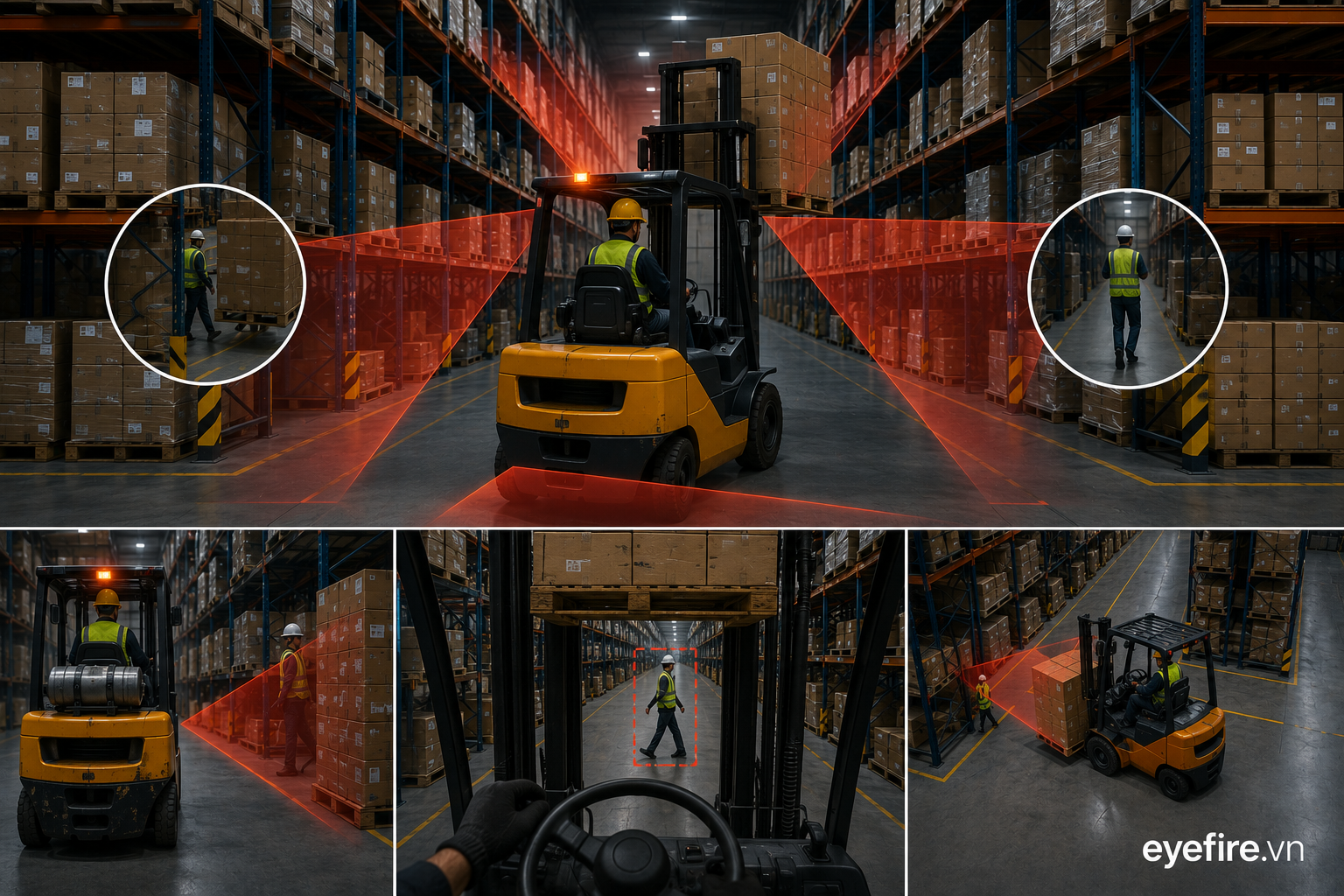
Traditional Cameras Help Operators See. AI Cameras Help Them Detect Risks.
Vehicle-mounted cameras are not new technology. Many companies have already installed rear-view cameras or monitoring cameras to improve operator visibility.
However, conventional cameras simply display video on a monitor inside the forklift cabin. The operator is still responsible for watching the screen, assessing potential hazards, and deciding when to stop or slow down. If their attention is diverted or they fail to notice the screen at the right moment, the risk of an accident remains.
AI cameras introduce an additional layer of protection. The system continuously analyzes live video feeds, identifies people, forklifts, vehicles, or obstacles within hazardous zones, and automatically issues visual or audible alerts whenever a collision risk is detected. The system can also activate external warning devices to help operators respond more quickly.
As a result, cameras no longer serve only as viewing devices - they become intelligent decision-support tools.
How AI Cameras Help Prevent Forklift Accidents
The greatest strength of AI cameras lies in their ability to identify risks before collisions occur.
Instead of waiting for an operator to notice a pedestrian entering a blind spot, AI can immediately recognize the person entering a danger zone and issue a real-time warning. This significantly shortens reaction time and reduces the likelihood of serious accidents.
Beyond preventing collisions between forklifts and pedestrians, AI cameras can also detect forklifts traveling in the wrong direction, entering restricted areas, exceeding designated operating zones, or multiple forklifts approaching high-risk intersections simultaneously.
More importantly, every detected event is automatically recorded, allowing businesses to analyze safety trends, identify locations with frequent near misses, and implement targeted improvements to reduce future risks.
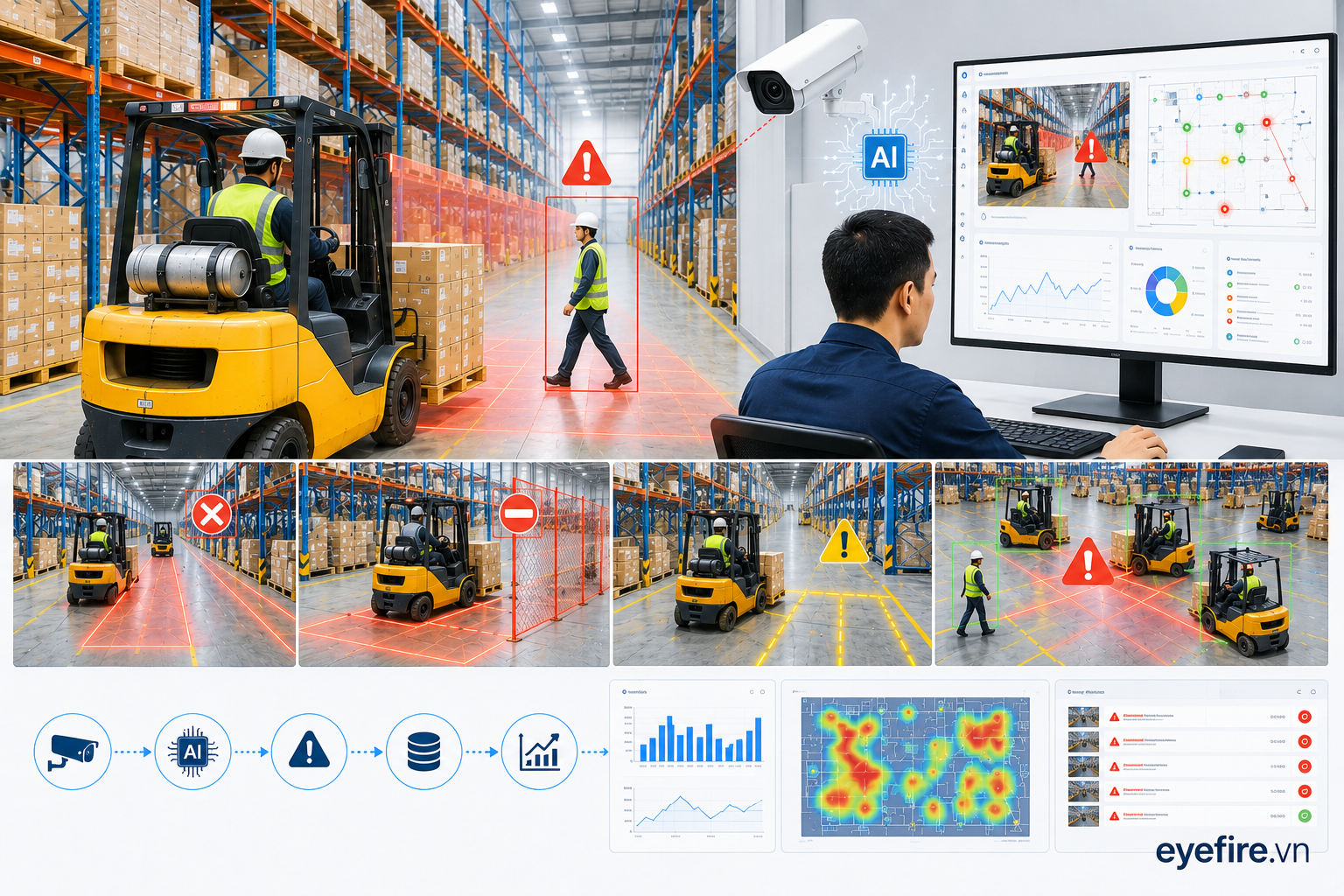
AI Cameras Improve More Than Workplace Safety
Many organizations initially invest in AI cameras to reduce workplace accidents. However, the value of the system extends well beyond safety.
The operational data generated by AI cameras provides valuable insight into how forklifts are actually being used throughout a facility. Managers can identify areas with the highest vehicle density, determine when congestion is most likely to occur, locate intersections with elevated collision risks, and evaluate whether current traffic routes are being used efficiently.
These insights enable companies to optimize internal traffic flow, improve warehouse layouts, and reduce forklift waiting times. Rather than reacting to individual incidents, businesses can continuously improve overall warehouse operations using objective operational data.
AI Cameras Can Be Deployed on Existing Infrastructure
One of the greatest advantages of modern AI camera platforms is their ability to leverage existing camera infrastructure. In many cases, organizations do not need to replace their current surveillance systems—they simply add AI-powered analytics that process existing video streams in real time.
The platform can also integrate with Warehouse Management Systems (WMS), Manufacturing Execution Systems (MES), and Environmental, Health, and Safety (EHS) platforms, allowing alerts and operational data to become part of the organization's broader management workflow. Instead of functioning as an isolated surveillance system, AI cameras become an integral component of day-to-day operations.
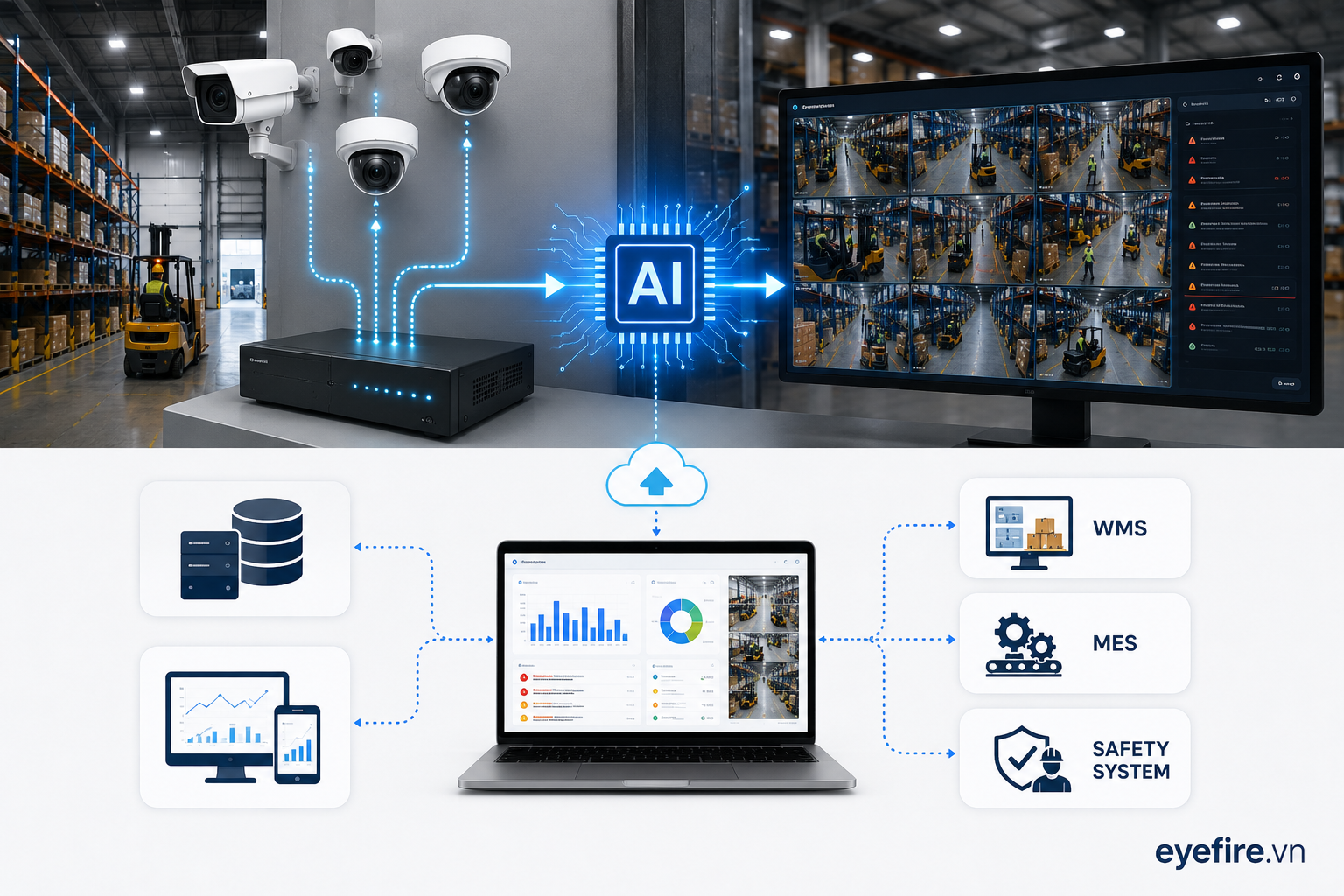
Key Considerations When Deploying AI Cameras for Forklift Safety
The effectiveness of an AI camera solution depends not only on the quality of its AI models but also on deploying cameras in the right locations and selecting the right operational challenges to address.
Organizations should first evaluate areas with heavy forklift and pedestrian traffic, blind spots, warehouse intersections, loading and unloading zones, and locations where near misses occur frequently. Once these high-risk areas are covered, the same AI camera platform can be expanded to support additional applications such as PPE compliance monitoring, restricted-area protection, and warehouse operations analytics.
Conclusion
Forklifts will continue to play a critical role in manufacturing facilities and logistics centers. As operations become faster and warehouse environments become increasingly complex, relying solely on operator experience or traditional surveillance cameras is no longer sufficient to minimize safety risks.
AI cameras offer a far more proactive approach. Instead of simply recording what has already happened, they identify potential hazards, provide real-time warnings, and transform video into valuable operational intelligence. This is the approach EYEFIRE is committed to delivering—helping manufacturers build safer workplaces, reduce collisions between forklifts and pedestrians, and optimize operational performance through real-time visual intelligence.