





In a factory, a machine stopping does not mean that the risks have disappeared. When a technician reaches inside equipment to clean, repair, or replace components, an unexpected machine startup or the release of stored energy can have serious consequences.
Lockout/Tagout (LOTO) was established to prevent such situations. However, the effectiveness of the procedure still depends on whether workers complete every step correctly, maintenance information is communicated promptly, and hazardous areas are continuously controlled.
AI Camera can serve as an additional monitoring layer for LOTO. It does not replace physical locks or the responsibilities of authorized personnel, but it can help factories monitor maintenance areas, detect visible deviations, and issue early warnings before risks develop into incidents.
What Is LOTO?
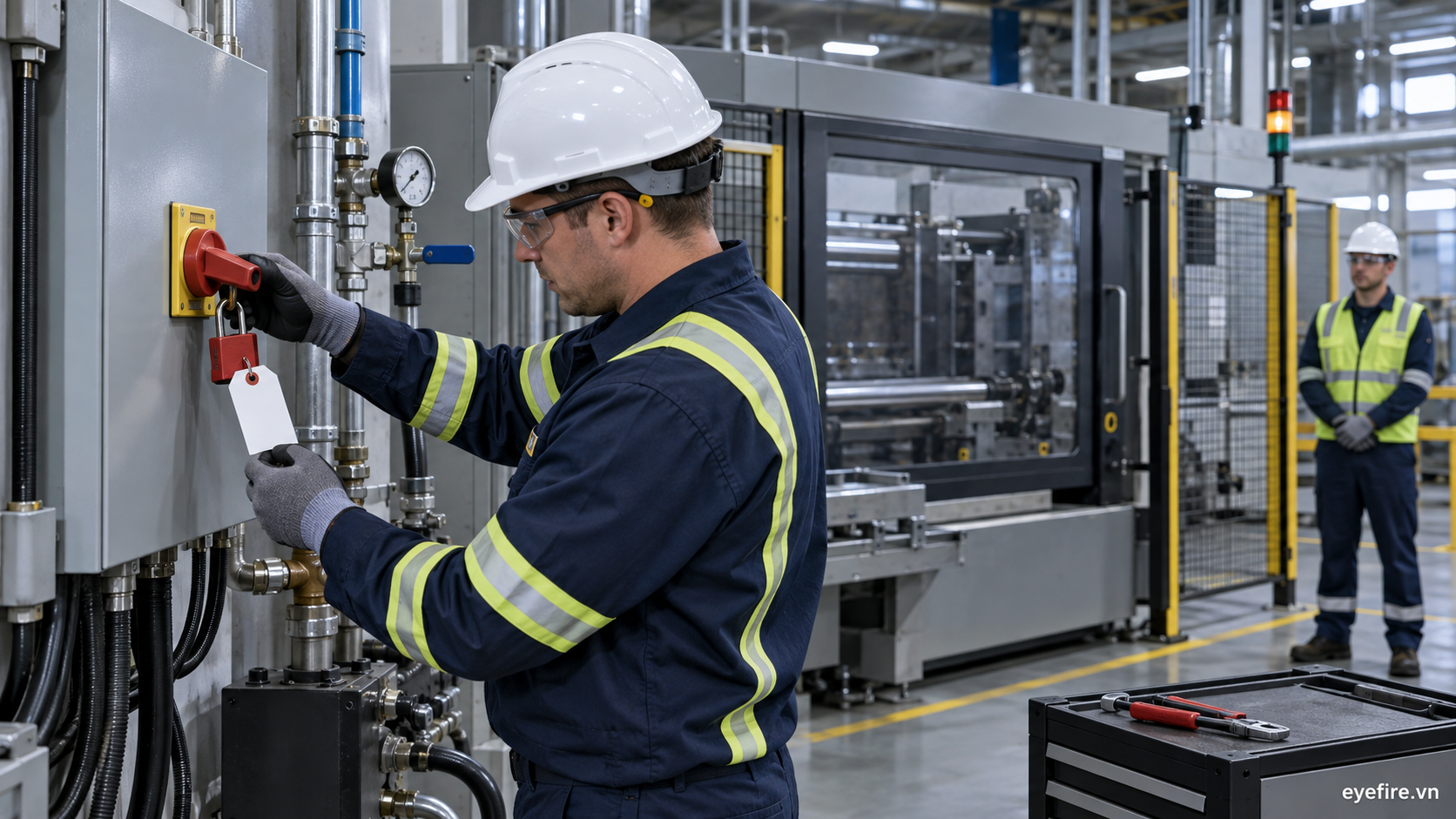
LOTO is a procedure for controlling hazardous energy before machinery is maintained, repaired, or cleaned. Before work begins, personnel must isolate the energy sources, lock the energy-isolating devices, attach warning tags, and verify that the equipment is in a safe state.
Under OSHA Standard 29 CFR 1910.147, the energy sources that need to be controlled may include not only electrical energy but also mechanical, hydraulic, pneumatic, chemical, thermal, and stored energy. The purpose of the procedure is to prevent machinery from starting unexpectedly or releasing energy while workers are operating inside a hazardous area.
An incident described by VnExpress shows how a risk can begin with a seemingly ordinary action. When maintenance work was divided into separate tasks to meet the schedule, another person noticed that the main circuit breaker was switched off and turned it back on without receiving any warning that someone was repairing the machine.
The core problem was not limited to the act of switching the power back on. It also involved the maintenance status not being recognized and communicated to the right person at the right time.
Gaps in LOTO Control
A complete LOTO program normally includes written procedures, lockout and tagout devices, personnel training, authorization, and periodic inspections. However, gaps may still exist between the established procedures and what actually takes place at the worksite.
Work permits and checklists only indicate which steps workers confirmed at the time of recording. They do not fully reflect whether the maintenance area remained in the correct state throughout the entire work period.
Supervisors cannot stand beside every machine for hours to maintain continuous observation. A lock may be removed too early, someone may enter the wrong area, or a person may interact with the control panel between two inspections.
The external condition of equipment can also be misleading. A machine that is not operating may not have been fully isolated from its energy sources. Similarly, an unlit control panel does not mean that electricity, pressure, or stored energy has been eliminated.
Employees from another shift, contractors, or visitors may also be unaware that a production line is under maintenance. Signs and barriers remain necessary, but their effectiveness depends on each person’s attention and safety awareness.
How Does AI Camera Support LOTO Control?
AI Camera analyzes camera footage in real time to identify people, objects, areas, and certain observable conditions. When the visual data does not comply with established safety rules, the system can issue an alert and retain evidence of the event.
Depending on site conditions, AI Camera can support LOTO in three main areas: controlling maintenance zones, monitoring visible equipment indicators, and detecting unauthorized personnel.
1. Identifying and Controlling Maintenance Areas
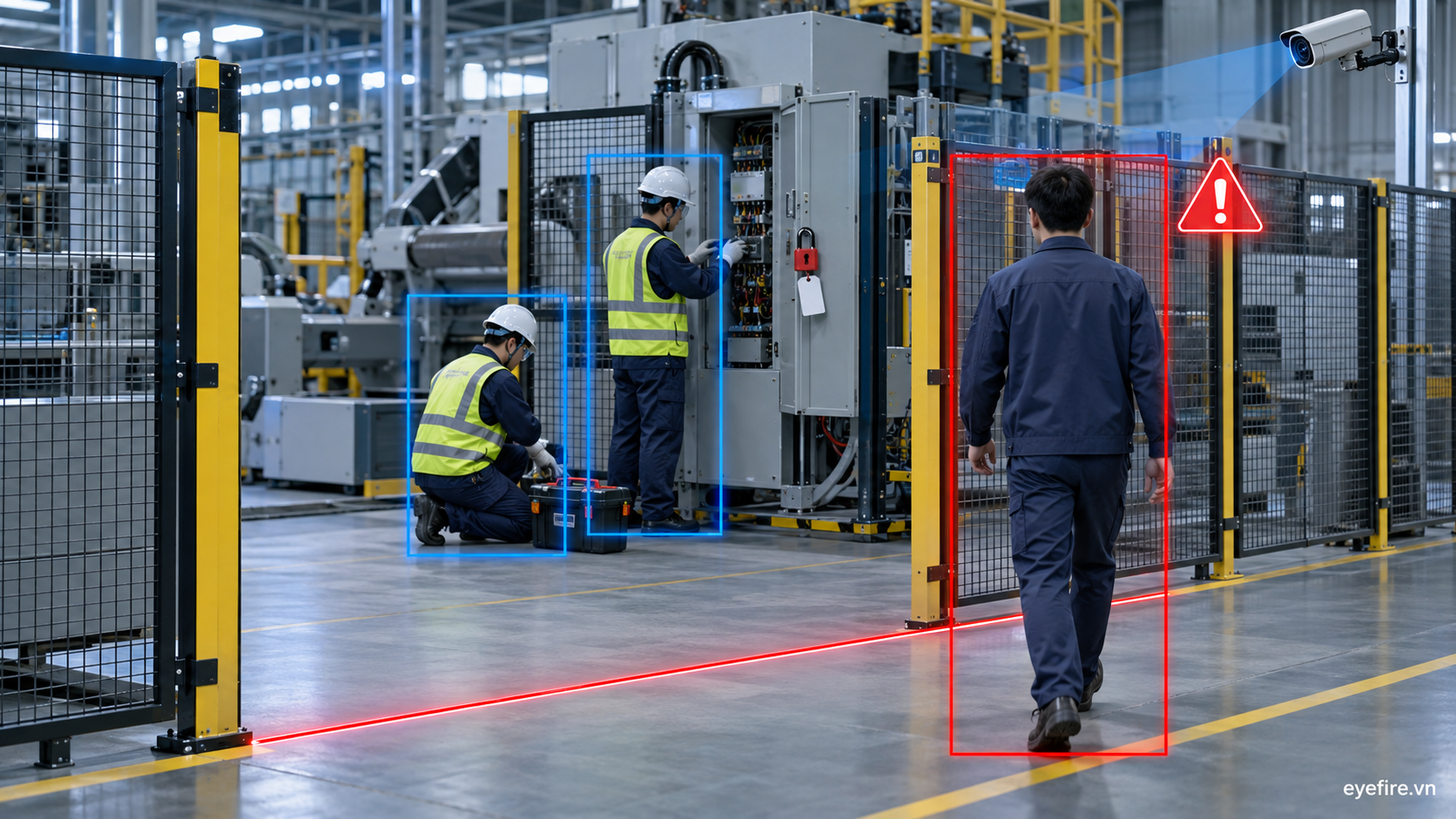
Managers can define virtual zones directly on camera footage, such as areas surrounding production lines, conveyors, electrical cabinets, or machine rooms. Different rules can be applied to each zone according to whether the equipment is in production or under maintenance.
With EYEFIRE’s area control capabilities, the system can detect people entering restricted areas, monitor the number of people present, and limit the amount of time they remain within a zone. These capabilities can be configured to support the monitoring of LOTO worksites.
When a maintenance work order begins, the relevant area can be switched to a dedicated monitoring mode. Depending on the factory’s infrastructure, this status change can be performed manually or through integration with a maintenance management system.
In this mode, the system can apply predefined conditions such as the permitted number of people, authorized working hours, and personal protective equipment requirements. If someone appears in the area without a valid maintenance activity or the number of people exceeds the established limit, the system issues an alert.
AI Camera can also record when someone enters, exits, or remains in an area for too long. This information helps supervisors identify cases in which work continues for an unusually long time, a worker has not left the hazardous zone, or the work permit has expired.
2. Monitoring Visible Indicators of Locks, Tags, and Equipment
This area requires careful assessment before implementation. Not every camera or type of lock, tag, and energy-isolating device can be accurately recognized from the outset.
If the camera angle, resolution, lighting, and equipment appearance are suitable, a computer vision model can be configured or trained to monitor indicators such as:
-
The presence of a lock or tag at the specified location;
-
Whether the electrical cabinet door is open or closed;
-
Whether an indicator light is on or off;
-
Whether a valve handle or lever is in the predefined position;
-
Whether a lock or tag has been removed while people remain in the area.
When a deviation is detected, the system can store an image or video together with the time and camera location. This data helps supervisors review the event, investigate its cause, and supplement the evidence used in safety assessments.
However, a camera can only verify what is visible in the image. Visual observation alone cannot establish that every energy source has been isolated, all pressure has been released, or the equipment contains no stored energy.
Zero-energy verification, startup testing, and confirmation that the equipment is safe must still be performed by trained and authorized personnel in accordance with the factory’s procedures.
3. Detecting Unauthorized Personnel Entering Hazardous Areas
A person who is unaware that equipment is under maintenance may enter the work area or interact with its controls. AI Camera helps detect this situation as soon as it occurs, rather than waiting for a supervisor to review the footage later.
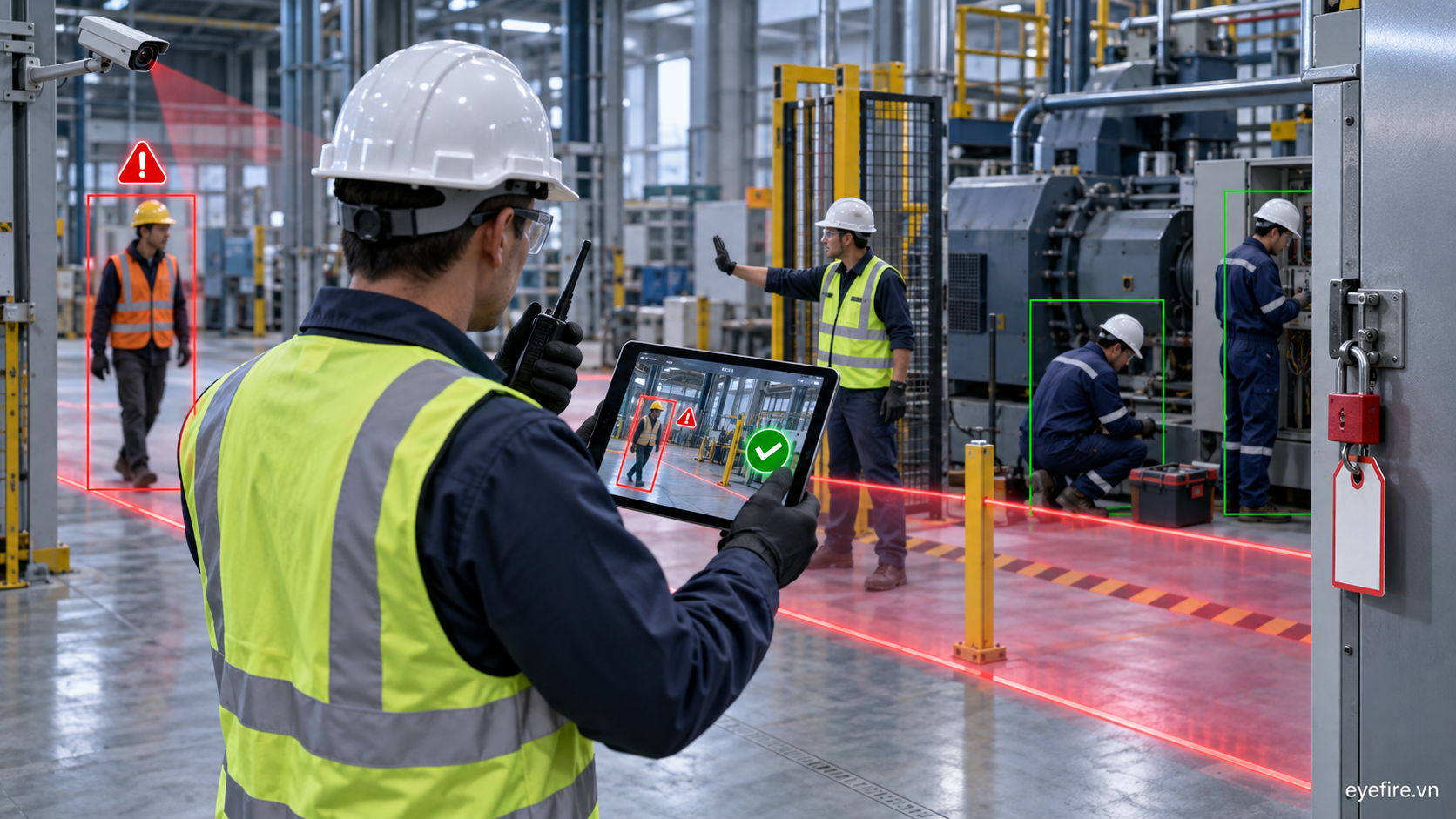
When someone crosses a virtual boundary, the system can issue an on-site warning or send a notification to the EHS department, maintenance team, and person responsible for the area. The alert may include an image so that the recipient can quickly assess the situation.
Rules can also be configured according to time. For example, personnel may be allowed inside the area during maintenance, but the area must be completely empty before the machine is returned to operation.
When integrated with personnel data or work permits, the system can support the distinction between assigned workers and unauthorized individuals. The integration must clearly define the data source, identification method, and procedure for handling inconsistencies between systems.
EYEFIRE has facial recognition technology that can operate on servers, edge devices, or mobile devices. Before using it in a factory, the company needs to assess its suitability, access control policies, and personal data protection requirements.
Facial recognition is not the only option. Depending on site conditions, the factory may use employee cards, work codes, uniforms, or simply monitor the presence of people in an area without identifying them.
AI Camera can also check certain types of PPE, such as helmets, gloves, or masks, according to the rules defined for the area. If a worker enters the maintenance area without the required protective equipment, the system issues an alert.
An Illustrative Operating Scenario
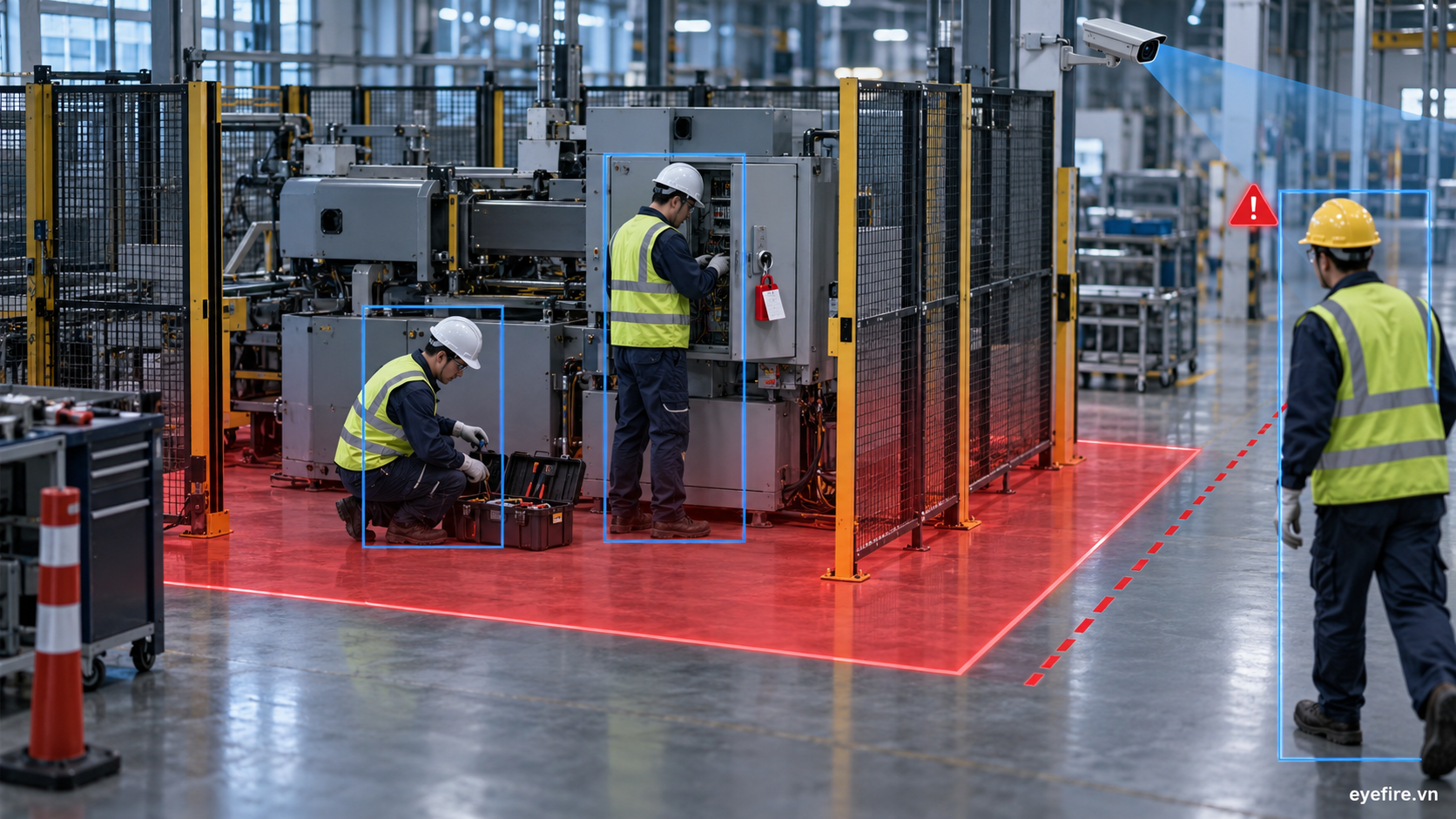
Suppose a technical team needs to perform maintenance on a packaging line. AI Camera can support the process as follows:
-
The maintenance team opens a work order and completes the energy isolation steps required by the LOTO procedure. The virtual zone surrounding the production line is switched to maintenance mode.
-
Technicians attach locks and tags at the energy isolation points. If the site has been assessed and the recognition model has been configured appropriately, the camera can visually verify the presence of locks or tags at the designated locations.
-
The camera monitors the number of people in the area, working duration, and PPE use. When someone who is not involved in the work enters, the system issues an on-site warning and sends an image to the supervisor.
-
The supervisor reviews and handles the event before confirming the result. Images, alert times, and responses are stored for subsequent review.
-
After maintenance is completed, an authorized person verifies the zero-energy state, confirms the equipment’s condition, and removes the locks in the correct sequence. AI Camera can issue an alert if someone remains in the area, but it does not independently decide whether energy should be restored.
This scenario demonstrates that AI does not perform LOTO on behalf of workers. The technology adds another layer of observation to detect visible deviations at the worksite as early as possible.
From Alerts to a Closed-Loop Response Process
An alert only has value when someone receives and handles it at the right time. For this reason, deploying AI Camera for LOTO should not stop at detecting people or objects.
The company must determine which events require an on-site warning, which cases should be reported to EHS or maintenance management, and who is responsible for verification. Response times, work-stoppage conditions, and methods for recording outcomes should also be clearly defined.
The system should allow responsible personnel to classify alerts as valid, false, or related to an authorized situation. This feedback provides a basis for adjusting monitoring zones, detection thresholds, and AI models according to actual operating conditions.
Can Existing Cameras Be Used?
EYEFIRE Safety is designed to analyze footage from existing camera systems and support multiple safety rules on the same infrastructure. The solution supports on-premise and cloud service deployment, as well as edge processing with EYEFIRE Hub.
However, the ability to use existing cameras does not mean that every camera position will meet the requirements of a LOTO application. A camera that provides an overview of the production line may be suitable for intrusion detection but may not be clear enough to identify a small lock on an electrical cabinet.
An actual project may require two layers of observation: wide-angle cameras for monitoring people and areas, and close-up cameras at isolation points for monitoring locks, tags, or equipment states. The assessment should consider resolution, lighting, obstructions, distance, and connectivity at each location.
AI Camera Does Not Replace Physical Locks or LOTO Procedures
Locks, tags, energy-isolating devices, and energy control procedures remain the primary safeguards. AI Camera cannot keep a circuit breaker in the off position, release pressure from a pipeline, or prevent mechanical energy from being released.
The system also does not replace written procedures, training, energy source identification, lock and tag placement, or zero-energy verification. Decisions about whether maintenance may begin or equipment may be returned to operation must remain with trained and authorized personnel.
The appropriate role of AI Camera is to serve as a second layer of verification. The technology supports continuous observation, early warnings, and visual evidence when a behavior or condition does not comply with established rules.
Conclusion
LOTO is effective only when every step is completed and maintained throughout the maintenance process. A missing lock, a person entering the wrong area, or energy being restored too early can reduce the effectiveness of the entire procedure.
AI Camera adds continuous observation capabilities to LOTO through maintenance area control, people counting, and PPE monitoring,