





In a modern manufacturing environment, where humans and machines operate together in a high-density space, maintaining concentration while moving is an important factor in ensuring occupational safety. Just one moment of inattention can lead to collisions with equipment, forklifts, or obstacles on the floor. Among the most common causes of distraction today, using a mobile phone while walking is considered an increasingly serious risk in factories and industrial zones.
Japanese companies have long recognized this risk. In the Poketenashi safety behavior rules, a method that helps workers remember five safe walking principles in factories, the second principle is called Ke, short for Keitai, meaning mobile phone. This principle requires workers not to use mobile phones while moving within production areas.
At first glance, this may seem like a simple rule. However, in reality, the behavior of walking while using a phone can significantly reduce awareness of the surrounding environment and increase the risk of accidents in factories. When combined with modern monitoring technologies such as AI cameras, the Ke principle does not stop at reminders but becomes part of a data-driven safety management system.
Why using a mobile phone while walking in a factory is dangerous
Smartphones have become a familiar part of modern life. However, in a manufacturing environment, using this device while moving can create many serious risks.
When a person focuses on their phone screen, most of their attention shifts to the content being viewed. This significantly reduces their ability to observe ahead and their peripheral vision. Workers may not notice changes in their surroundings, such as a forklift approaching, an autonomous robot moving, or a colleague carrying heavy objects passing by.
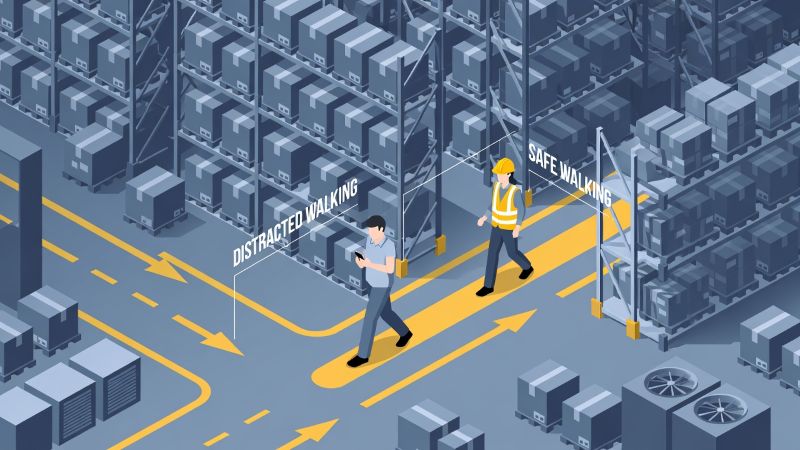
Occupational safety studies show that distraction while walking can significantly increase the risk of collisions and falls. According to many studies on movement behavior, when people use mobile phones while walking, their reaction speed to unexpected situations can be significantly reduced compared to a normal focused state. In industrial environments where many devices are in motion, this delay can lead to accidents within just a few seconds.
Another issue is that using a mobile phone often causes workers to change their walking posture. They tend to lower their heads toward the screen, narrowing their field of vision and reducing awareness of their surroundings. In a factory, where floors may be slippery or contain many small obstacles, such reduced visibility can increase the risk of tripping.
In addition, when holding a phone in one hand, part of the body’s reflex capability is also limited. In situations requiring evasion or balance recovery, workers may not be able to react in time because one hand is occupied holding the device.
The Ke principle in Poketenashi and Japanese safety culture
Poketenashi is a method for remembering safe walking rules used in many Japanese manufacturing companies. Each letter in the name represents a behavior to avoid or perform when moving in the factory.
Ke, short for Keitai, emphasizes not using a mobile phone while walking. This principle stems from Japanese safety management philosophy, where human behavior is considered the most important factor in accident prevention.
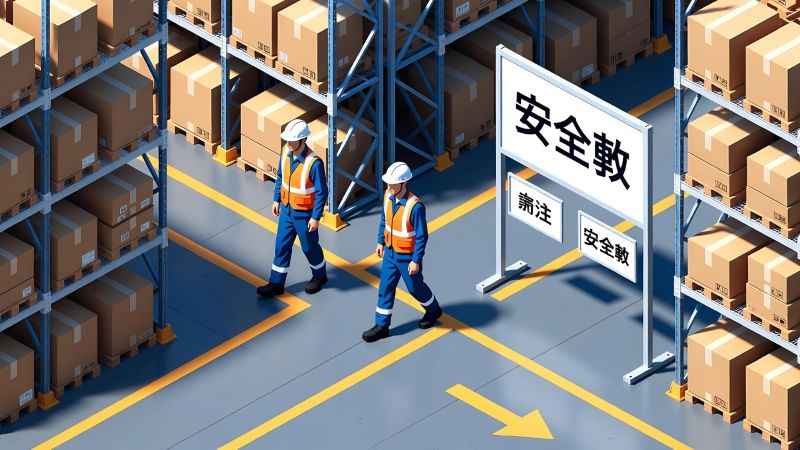
In many Japanese factories, the use of mobile phones in production areas is strictly restricted. Workers are only allowed to use devices in designated areas such as break rooms or office areas. When communication is necessary during work, they must stop at a safe location before using their phone.
Maintaining this rule ensures that everyone remains focused while moving within production areas. When all employees follow the same behavioral standard, the working environment becomes more predictable, and the risk of accidents is significantly reduced.
However, in practice, ensuring that all employees always comply with this rule is not always easy. Work pressure, personal habits, or the need for quick communication may cause some individuals to unintentionally use their phones while moving.
Limitations of traditional monitoring methods
In many factories, controlling phone usage behavior is often based on observation by managers or safety staff. However, this method has many limitations.
Production areas are often very large, with many corridors and walkways. A small team of safety staff cannot monitor all activities happening in the factory at once. In addition, behaviors such as looking at a phone often occur within just a few seconds, making them difficult to detect with the naked eye.
Even when surveillance camera systems are installed, most traditional cameras only have recording functions. Reviewing all video data to find violations is almost impossible due to the massive amount of data.
Therefore, many businesses are turning to new technological solutions to support safety behavior monitoring in manufacturing environments.
AI cameras help detect phone usage while moving
The development of computer vision technology has opened a new approach to occupational safety monitoring. AI cameras can analyze images in real time and recognize human behavior within the frame.
Through object detection and posture analysis models, the system can detect when a person is holding a phone while also moving within the production area. When these two factors occur simultaneously, the system can identify this as walking while using a mobile phone.
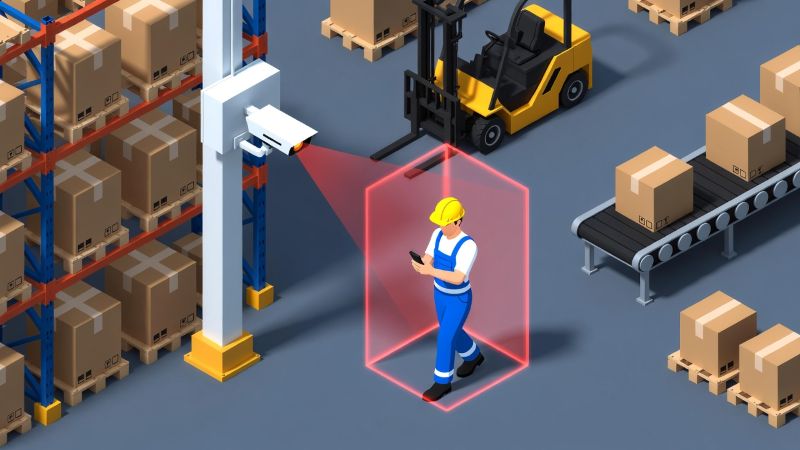
This recognition capability is particularly useful in high-risk areas such as shared walkways, intersections between pedestrians and forklifts, or corridors near production lines. When dangerous behavior is detected, the system can record the event and send alerts to management in real time.
Thanks to this, businesses can remind workers to adjust their behavior immediately before an accident occurs.
In addition to alert functions, AI cameras also allow the collection of behavioral data over time. This data helps businesses better understand risk trends in the factory. For example, if the system detects that phone use while walking occurs frequently at the start or end of shifts, this may reflect factors related to worker habits or levels of attention.
From this data, businesses can improve safety training programs, adjust operational procedures, or redesign workspaces to minimize risks.
EYEFIRE Safety and AI camera-based safety monitoring solutions
The EYEFIRE Safety AI camera solution is developed to support manufacturing businesses in monitoring safety behavior in the workplace. The system uses Edge AI technology to analyze image data directly on the device, reducing latency and ensuring real-time processing capability.
Through human recognition and object detection algorithms, the system can identify when a person is holding a phone while moving in a production area. When this behavior is detected, the system can send alerts to the control center or display notifications in the work area to remind workers.
In addition, the system allows the setup of virtual monitoring zones within the factory. Businesses can configure high-risk areas such as intersections with forklifts or areas near production lines to enhance monitoring of phone usage behavior.
Data from the system can also be aggregated into reports that help the safety department evaluate worker compliance levels. As a result, businesses can shift from manual observation-based management to a data-driven safety management model.
Conclusion
The Ke principle in Poketenashi emphasizes that not using a mobile phone while walking in the factory is an important behavior to ensure occupational safety. When workers maintain focus while moving, they can recognize surrounding hazards early and respond promptly to unexpected situations.
However, in modern manufacturing environments with large scale, ensuring that everyone always follows this rule is a challenge. AI camera technology provides an effective solution by monitoring behavior in real time and detecting risks early.
By combining safety culture based on the Poketenashi spirit with technological solutions such as EYEFIRE Safety, businesses can build a proactive safety management system. This not only helps reduce workplace accidents but also contributes to creating a more efficient and sustainable manufacturing environment.