





In industrial production environments, accidents caused by slipping and collisions while walking account for a large proportion of total workplace accidents. Most of these incidents do not originate from serious technical failures but from small behaviors during movement such as losing concentration, walking in the wrong path, or skipping safety checks. For this reason, standardizing walking behavior in factories has become a core element of modern safety management.
In Japan, where safety culture is considered a top priority, many companies have adopted a set of behavioral rules for moving within factories called Poketenashi. This is not an official academic term but rather a mnemonic used to remember five basic principles that help workers develop safe walking habits and maintain concentration while working.
In the context of digital transformation, behavioral principles such as Poketenashi are no longer limited to training sessions or manual reminders. Many factories have begun applying AI cameras to monitor compliance in real time, detect risky behaviors early, and provide data to improve safety processes. Technology does not replace humans but acts as an additional layer of protection that helps companies shift from reacting after accidents to proactive prevention based on behavioral analysis.
This article analyzes in detail what Poketenashi is, the five safe walking principles used in Japanese factories, and how AI cameras can be applied to monitor behavior in order to prevent workplace accidents proactively and effectively.
Poketenashi in Japanese safety culture
Poketenashi is a reading formed from the first letters of five safe walking behaviors in the workplace. This set of principles is often implemented in safety training programs at large Japanese manufacturing corporations such as Toyota or Hitachi. The objective is not only to reduce accidents but also to build a culture of discipline and self awareness among workers.
The special feature of Poketenashi is its simplicity. Instead of complicated regulations workers only need to remember five basic behaviors during movement. However these seemingly small behaviors directly influence the rate of slipping and collision accidents in factories.
In the context of digital transformation many companies do not stop at communication and training but also integrate AI cameras to monitor compliance with the five safe walking principles. The combination of Japanese discipline and computer vision technology is opening a new approach to occupational safety management.
Below is a detailed analysis of each principle.
1. Po (Pocket) means do not put hands in pockets while walking in the factory
The Po principle in Poketenashi comes from the word Pocket and reminds workers not to put their hands in their pockets when moving in factory areas, workshops, or industrial facilities. This requirement may appear very simple but it has important implications for controlling the risk of accidents caused by slipping and collisions.
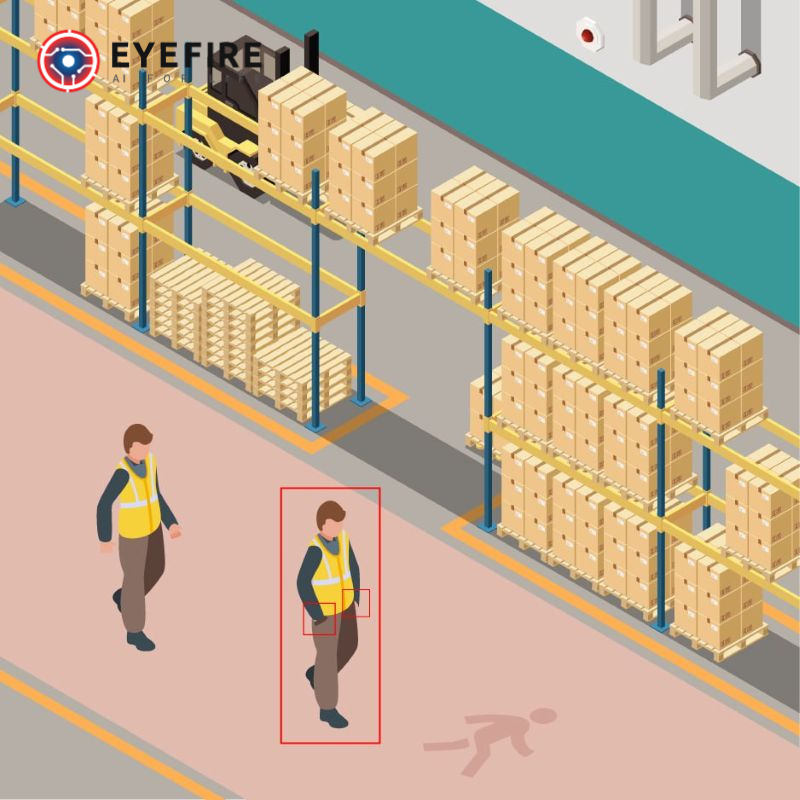
In production environments the floor may contain oil, metal dust, water, or small obstacles. When a slipping situation occurs the natural reflex of the body is to extend the arms forward or to the side to maintain balance and reduce impact. If both hands are inside pockets this reflex is delayed even for a brief moment, but that short moment can determine the severity of an injury.
Besides the reflex factor putting hands in pockets also changes the center of gravity of the body and restricts the natural arm movement while walking. In environments where forklifts, autonomous robots, or moving equipment may appear unexpectedly workers must maintain readiness to avoid or stop suddenly. Free arms help increase balance and support more flexible movement.
In modern factories the principle of keeping hands out of pockets also reflects posture and work attitude. A posture with free arms and active steps demonstrates concentration and readiness to react. When all workers maintain the same behavioral standard the working environment becomes more disciplined and synchronized, thereby reducing risks caused by individual negligence.
AI cameras can play an important role in standardizing and maintaining this principle. Through body posture recognition technology the system can determine the relative position of the arms compared with the body during movement. When it detects that both arms remain fixed close to the hips for a long period and lack natural movement while walking the system can record the behavior that requires a reminder.
Unlike manual supervision which depends on random observation AI cameras provide continuous monitoring capability in high risk areas such as common walkways, intersections with forklifts, or corridors near production lines. The collected data can be analyzed by work shift, by location, or by time of day to identify violation trends. If the rate of workers putting hands in pockets increases toward the end of a shift it may reflect fatigue and help management adjust break schedules or rotate positions.
Besides recording behavior the system can also integrate on site visual alerts. For example when the behavior is detected in sensitive areas screens or signal lights can immediately remind workers to adjust their posture before an incident occurs. This approach focuses on proactive prevention instead of dealing with consequences after accidents.
2. Ke (Keitai) means do not use a phone while walking
The Ke principle in Poketenashi comes from the word Keitai which means mobile phone. In factories, workshops, and industrial facilities not using a phone while walking is a mandatory requirement to ensure safety during movement.
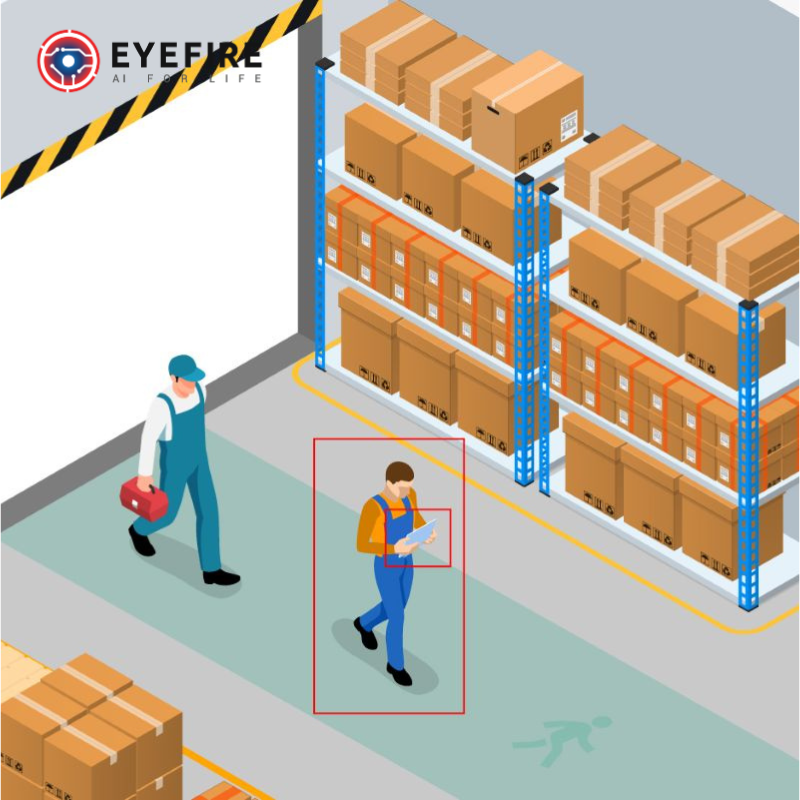
When looking at a screen both forward vision and peripheral vision become limited. Workers may fail to notice a forklift approaching, an autonomous robot moving nearby, or warning signs on the floor. Only a few seconds of distraction can create a serious collision, especially at intersections between people and vehicles.
Besides collision risks using a phone while moving also reduces reaction capability. The brain focusing on information on the screen reacts more slowly to unexpected situations. In production environments that contain many dynamic elements this delay significantly increases accident risk.
AI cameras can support control of this principle by combining object detection and posture analysis. The system detects characteristic handheld devices while simultaneously identifying the head looking downward as the body moves. When these two elements appear together within production areas the system can record the event and trigger a real time alert.
3. Te (Tesuri) means always hold the handrail when using stairs
The Te principle in Poketenashi refers to Tesuri which means stair handrail. In factories, workshops, and industrial facilities staircases are among the areas with high fall risk due to height differences, surfaces that may contain dust, oil, or water, and heavy movement during peak hours.
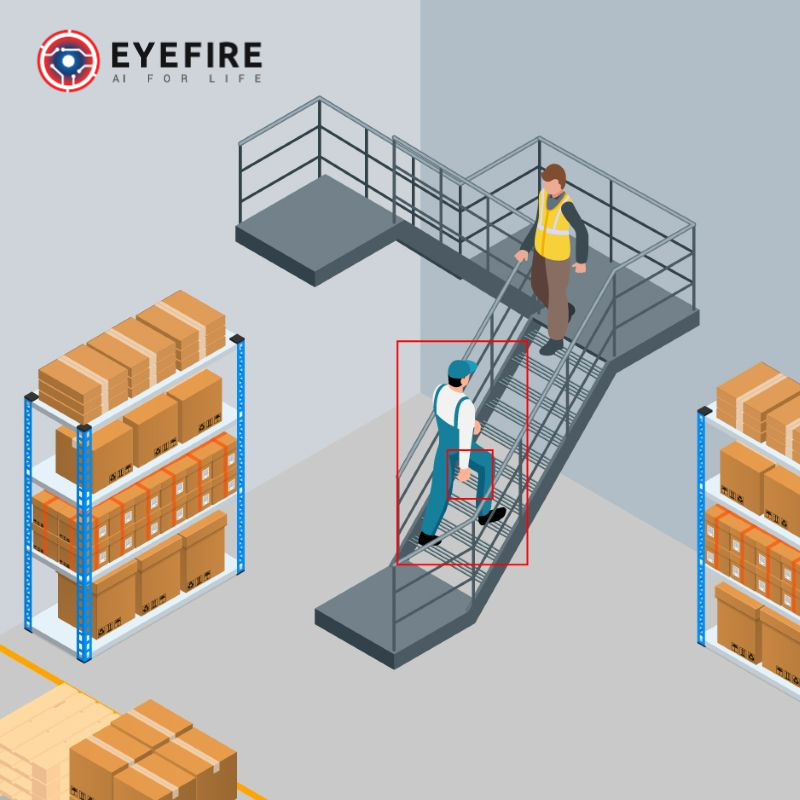
When going up or down stairs, especially while wearing heavy safety shoes or carrying items, the body center of gravity can easily become unstable. The handrail acts as a safety anchor that helps maintain balance and reduce impact if a slip occurs. Even a small missed step can lead to serious injuries to knees, wrists, or the spine.
Always holding the handrail also creates a controlled walking habit instead of moving quickly by inertia. When all workers follow this principle movement on stairs becomes more orderly and the risk of collisions decreases.
AI cameras can assist monitoring by establishing observation zones around stair areas and analyzing hand positions relative to the handrail during movement. The system recognizes stair movement behavior and determines whether there is contact with the handrail. This data helps companies evaluate compliance levels, identify high risk time periods, and implement appropriate improvement measures.
4. Na (Naname) means do not cross diagonally or take shortcuts
Naname in Japanese means moving diagonally. In the context of factories this principle requires workers not to cross diagonally through production areas and not to take shortcuts through forklift lanes or machine areas to save a few seconds of walking time.
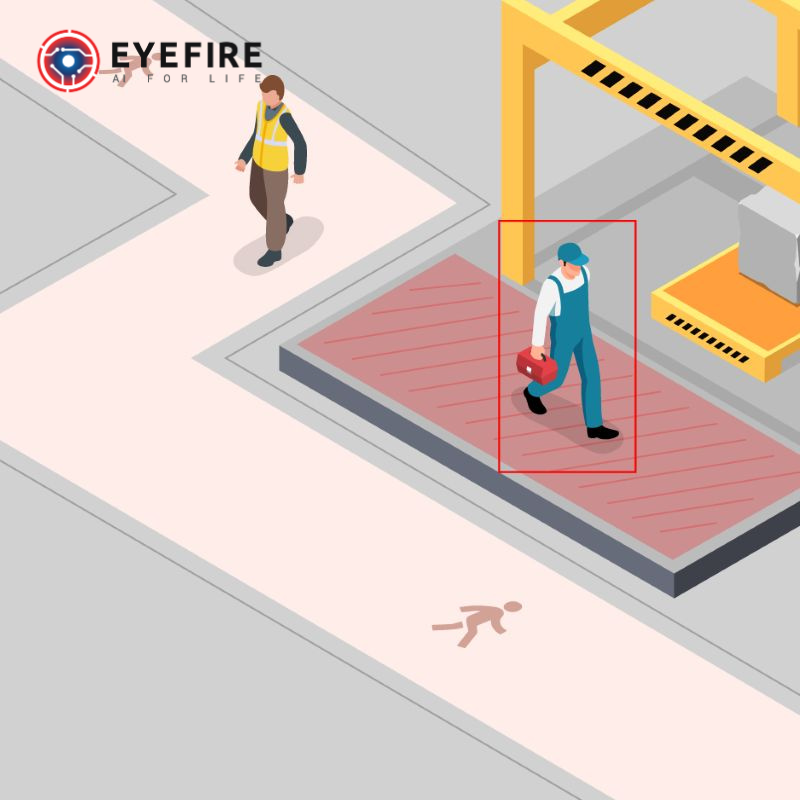
Shortcut behavior often originates from a sense of urgency or habitual carelessness. However in industrial environments pathways are designed based on the principle of separating pedestrian flow and vehicle flow. When someone crosses diagonally through an area not intended for pedestrians the risk of collision with forklifts, autonomous robots, or mechanical equipment increases significantly.
Following floor markings and designated paths helps the system operate safely and makes movement behavior predictable. Even a single individual breaking the rule can create dangerous situations for the entire area.
AI cameras can monitor diagonal crossing behavior by establishing virtual zones in the system. Valid walkways are marked as safe zones while forklift areas or restricted zones are configured as warning zones. When the system detects pedestrians crossing through restricted zones or moving outside designated paths an alert can be triggered immediately.
Besides real time alerts the data also helps companies analyze hotspots where shortcut behavior frequently occurs. Based on this information companies can adjust pathway design, install physical barriers, or optimize operational processes to reduce motivation for violations.
5. Shi (Yubisa shi) means pointing and calling to confirm safety
Yubisa shi is a method of pointing and calling to confirm safety before performing an action in production environments. In factories, workshops, and industrial facilities this is a systematic risk control technique that helps standardize safe behavior at high risk points.
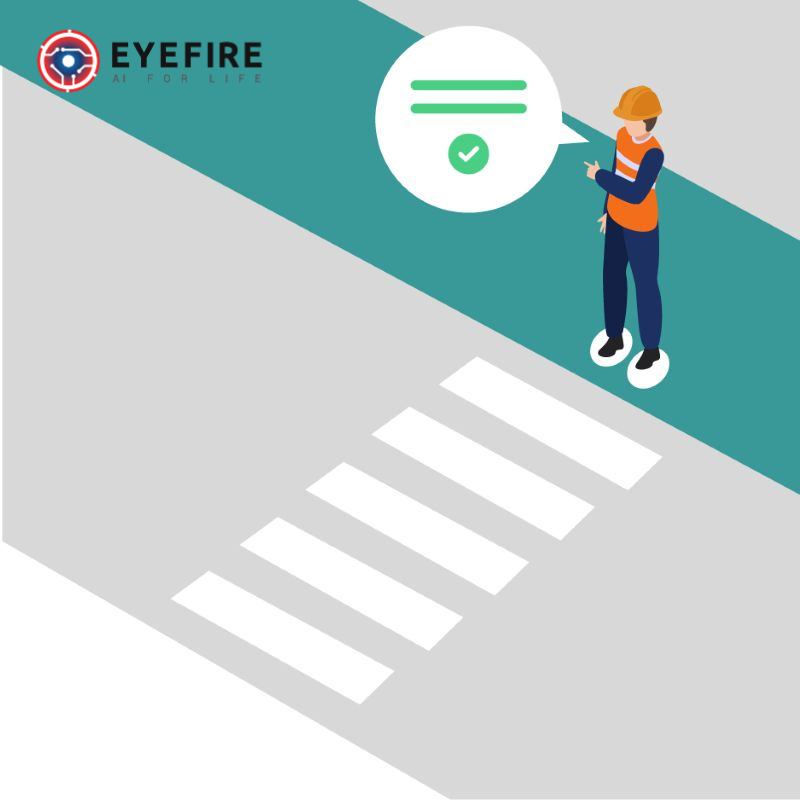
In reality most factory accidents do not originate from severe equipment failure but from operational mistakes, skipped checks, or actions performed by habit. Yubisa shi is designed to create an intentional pause before each critical action. When workers stop, point at the object, and verbally confirm the safe status they activate a multisensory confirmation mechanism involving vision, motion, and language. This coordination increases concentration, reduces mistakes caused by complacency, and limits uncontrolled automatic behavior.
In factory contexts Yubisa shi can be applied in many specific situations. Before starting a machine a worker points to the control panel and confirms the safety condition. Before crossing a forklift lane the worker points to both sides and clearly states that the area has been checked. When operating electrical cabinets or compressed air systems the worker confirms that power has been disconnected or pressure has returned to a safe level. When checking personal protective equipment at the beginning of a shift each worker may point to the helmet, glasses, and gloves and confirm that they meet safety standards.
The strength of this method in factories lies in standardization. When all workers perform the same confirmation action safe behavior becomes a shared standard rather than an individual choice. This is especially important in areas where people interact with automated equipment, where a single missed check can lead to serious incidents.
The AI camera solution of EYEFIRE Safety in monitoring Poketenashi
The AI camera system of EYEFIRE Safety provides a platform for real time monitoring of safe behavior based on Edge AI technology. Instead of only recording video passively the system can analyze posture, movement, and human interaction within production areas. This allows companies to configure monitoring scenarios aligned with the five Poketenashi principles such as detecting people using phones while walking, identifying behavior of not holding stair handrails, detecting abnormal movement in intersection areas, or recording safety confirmation actions based on the pointing and calling method.
The AI cameras of EYEFIRE Safety can configure virtual monitoring zones, establish behavior based alert conditions, and send immediate notifications to management when risks are detected. All data is stored and analyzed to generate trend reports that help companies evaluate compliance levels, identify risk hotspots, and improve safety processes. As a result implementing Poketenashi is no longer limited to training but becomes a proactive monitoring system that can be measured and continuously optimized.
Conclusion
Poketenashi is a set of five safe walking principles that helps prevent accidents in factories, workshops, and industrial facilities by standardizing even the smallest behaviors during movement. From keeping hands out of pockets, not using phones while walking, always holding stair handrails, not running, to pointing and calling to confirm safety, all principles aim to reduce risk at the root of human behavior.
When combined with AI camera solutions such as those from EYEFIRE Safety these principles are elevated to a new level, transforming from reminder based rules into a safety management system driven by data and real time behavioral analysis. Technology helps companies not only detect violations but also understand risk trends, allowing them to proactively adjust facility design, operational processes, and training programs.
The combination of behavioral discipline inspired by Poketenashi and intelligent AI camera platforms creates a proactive safety model for modern factories, helping reduce workplace accidents, protect workers, and improve production efficiency in a sustainable way.