




Safety Monitoring Solution for Overhead Crane Underside Areas in Steel Processing Plants
Deploying AI cameras to monitor hazardous zones beneath lifting cranes, with real-time alerts when people enter dangerous areas.
CUSTOMER OVERVIEW
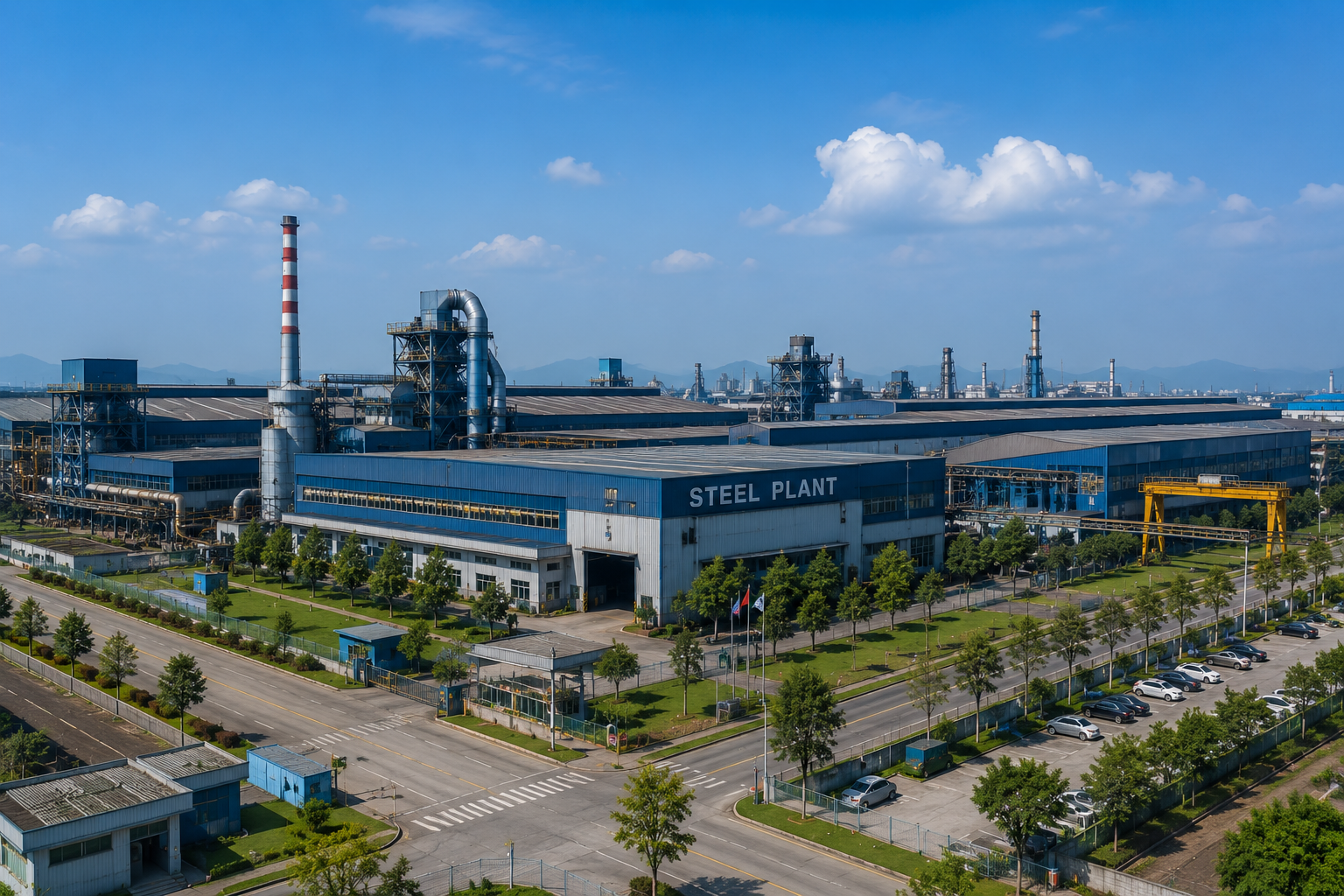
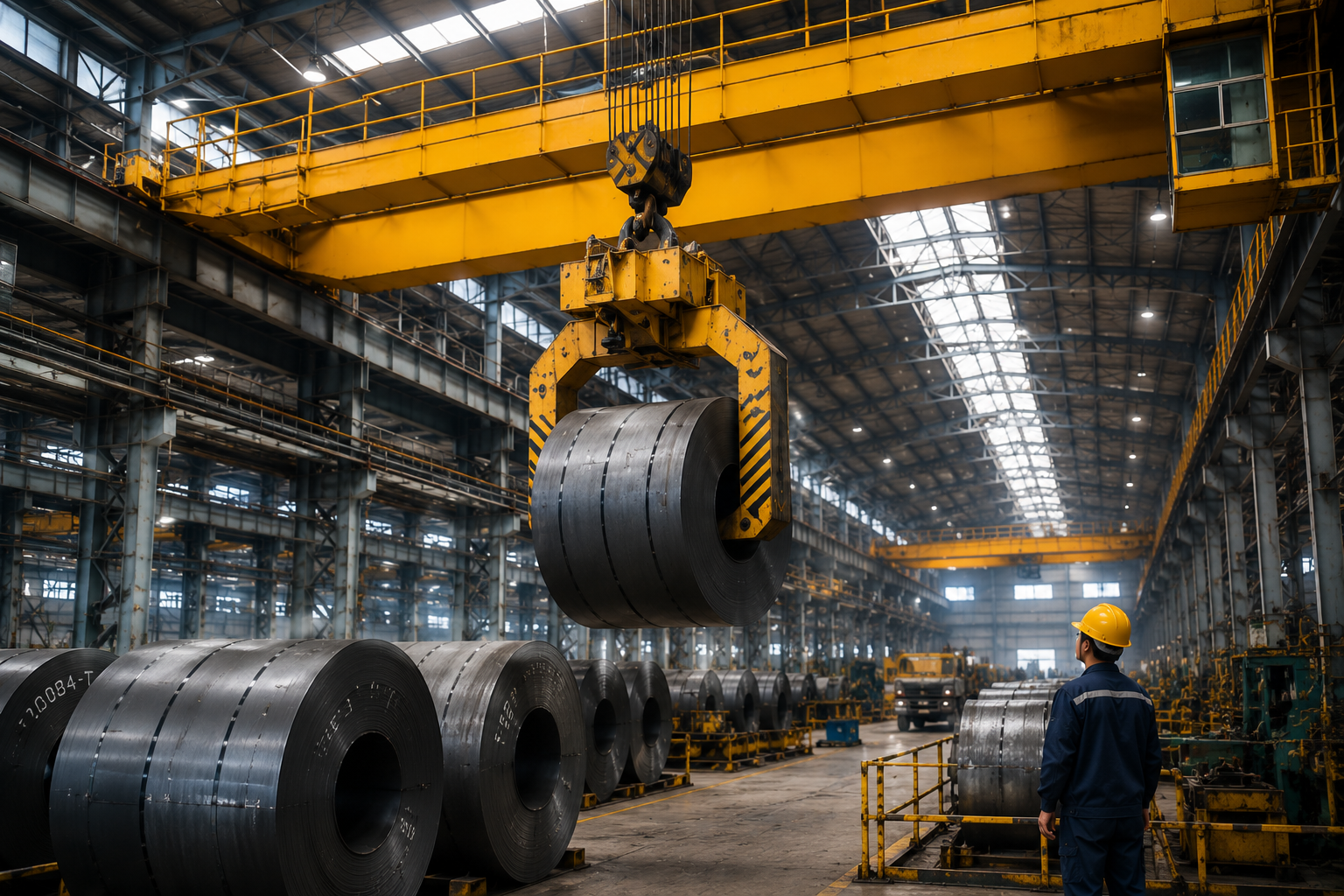
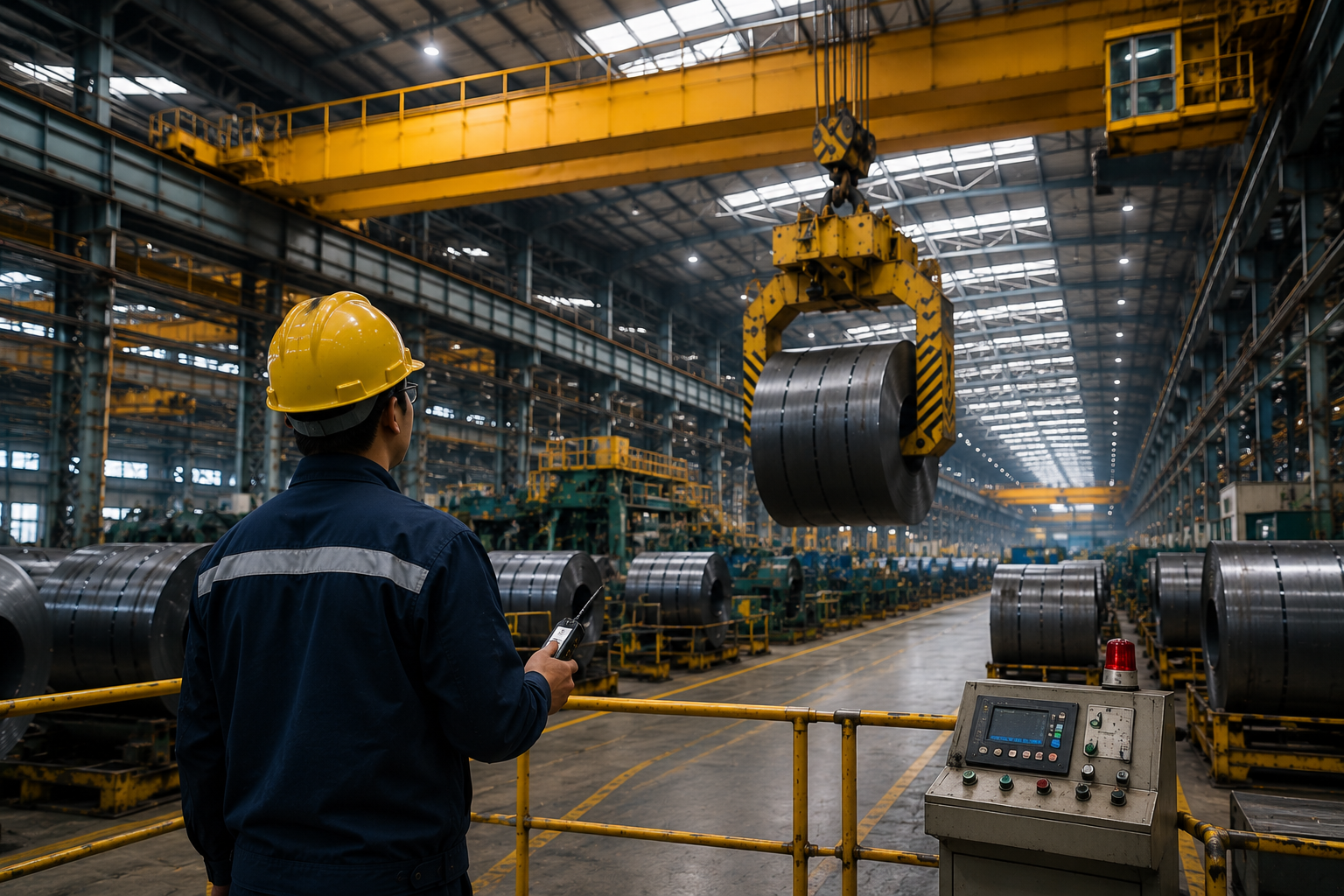
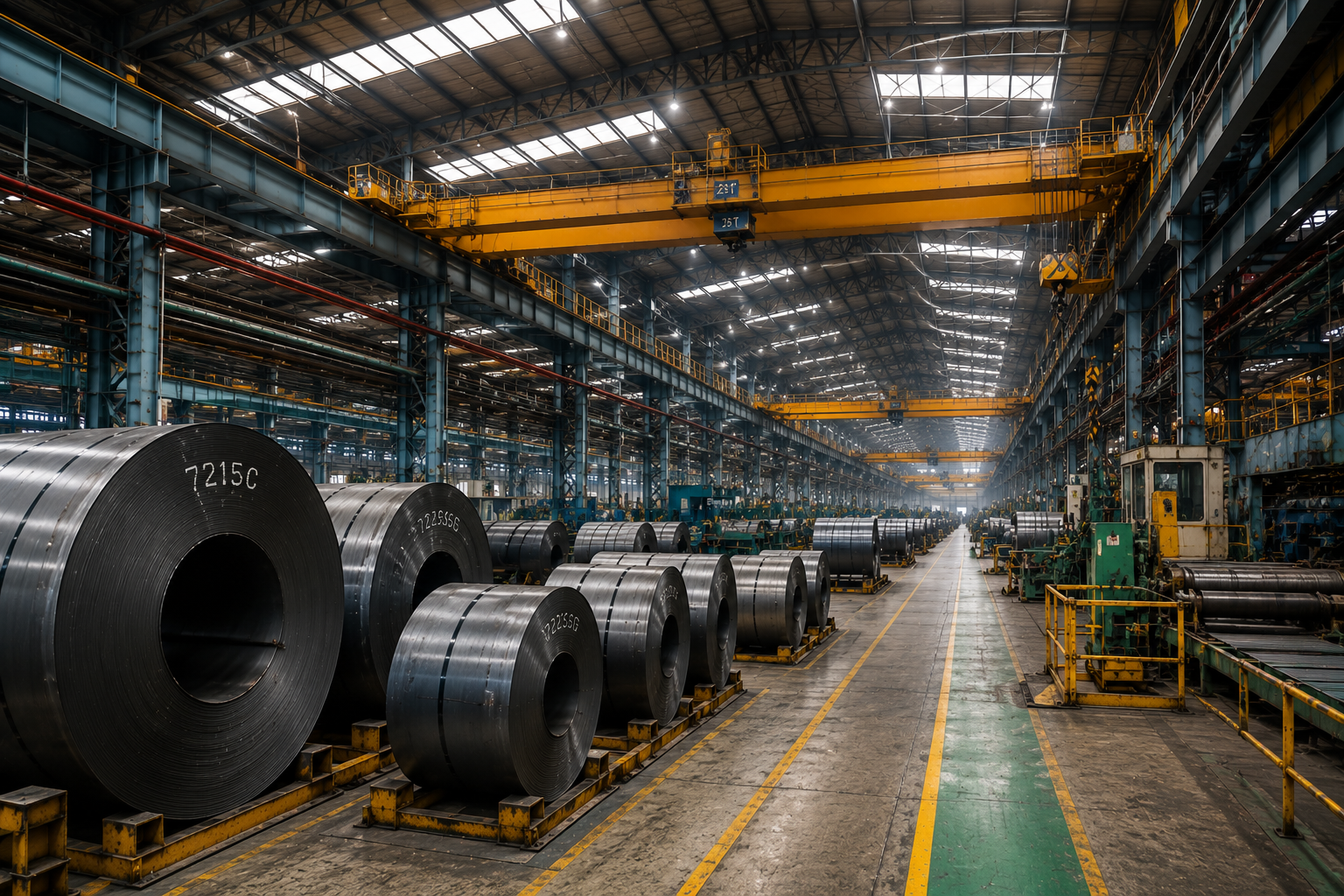
The customer is a steel coil processing and handling plant operating an overhead crane system continuously within a heavy industrial production environment.
During the transportation of large steel coils, the company must ensure the safety of personnel working beneath the crane system while maintaining operational continuity and production efficiency.
Due to the high density of lifting and handling equipment in the manufacturing environment, real-time hazardous area monitoring has become a critical requirement to minimize workplace accident risks and support safer operations.
SOLUTION – EYEFIRE SAFETY
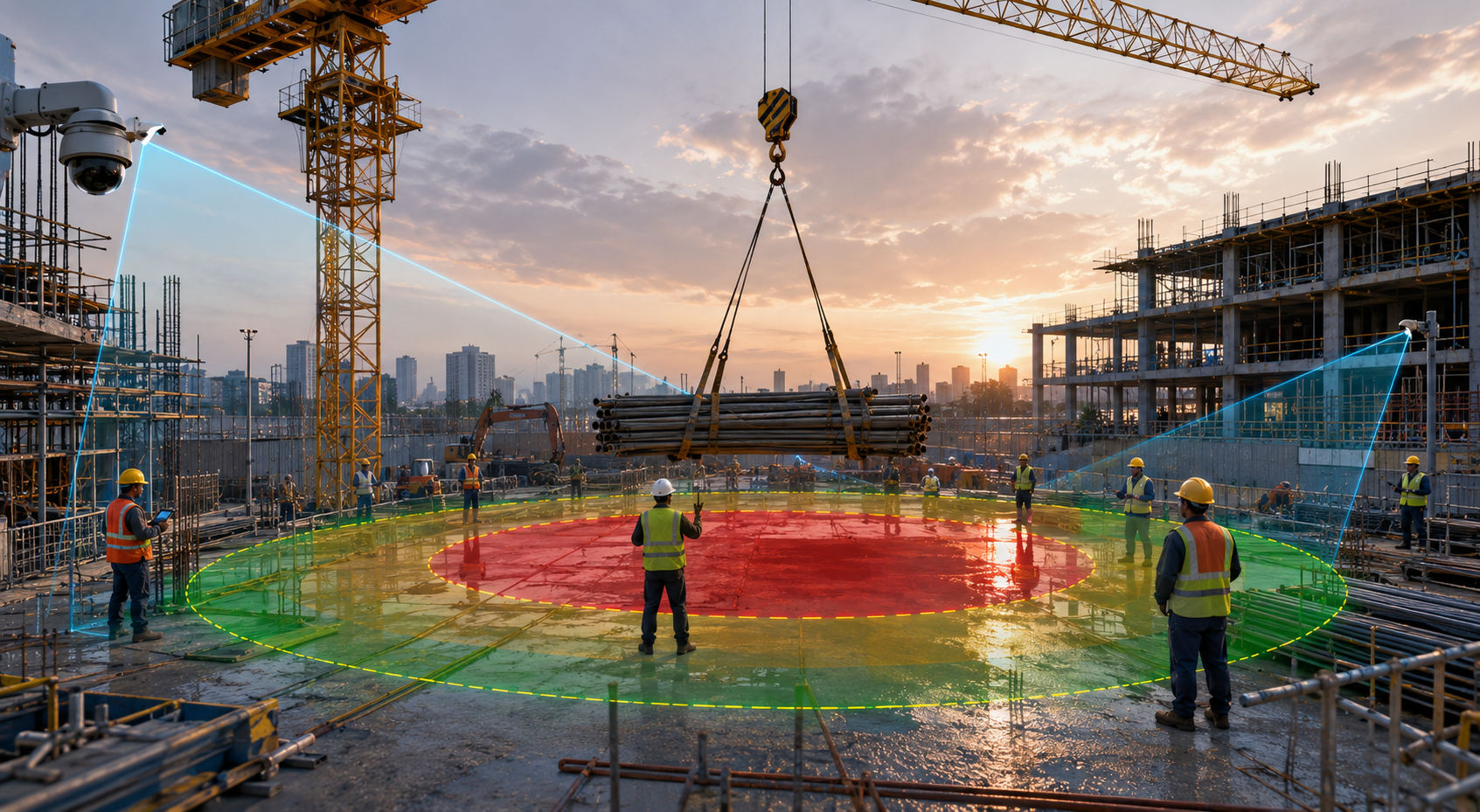
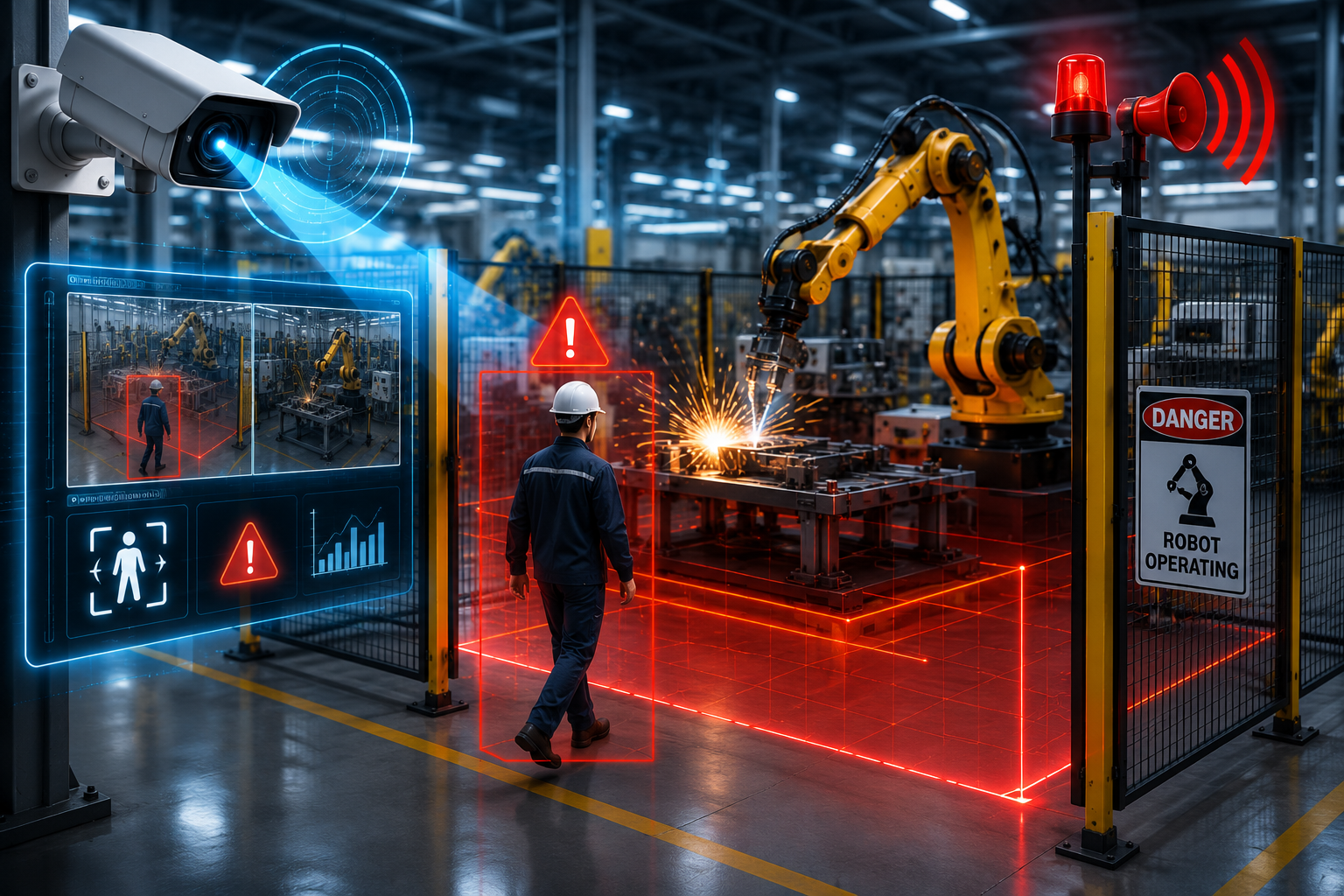
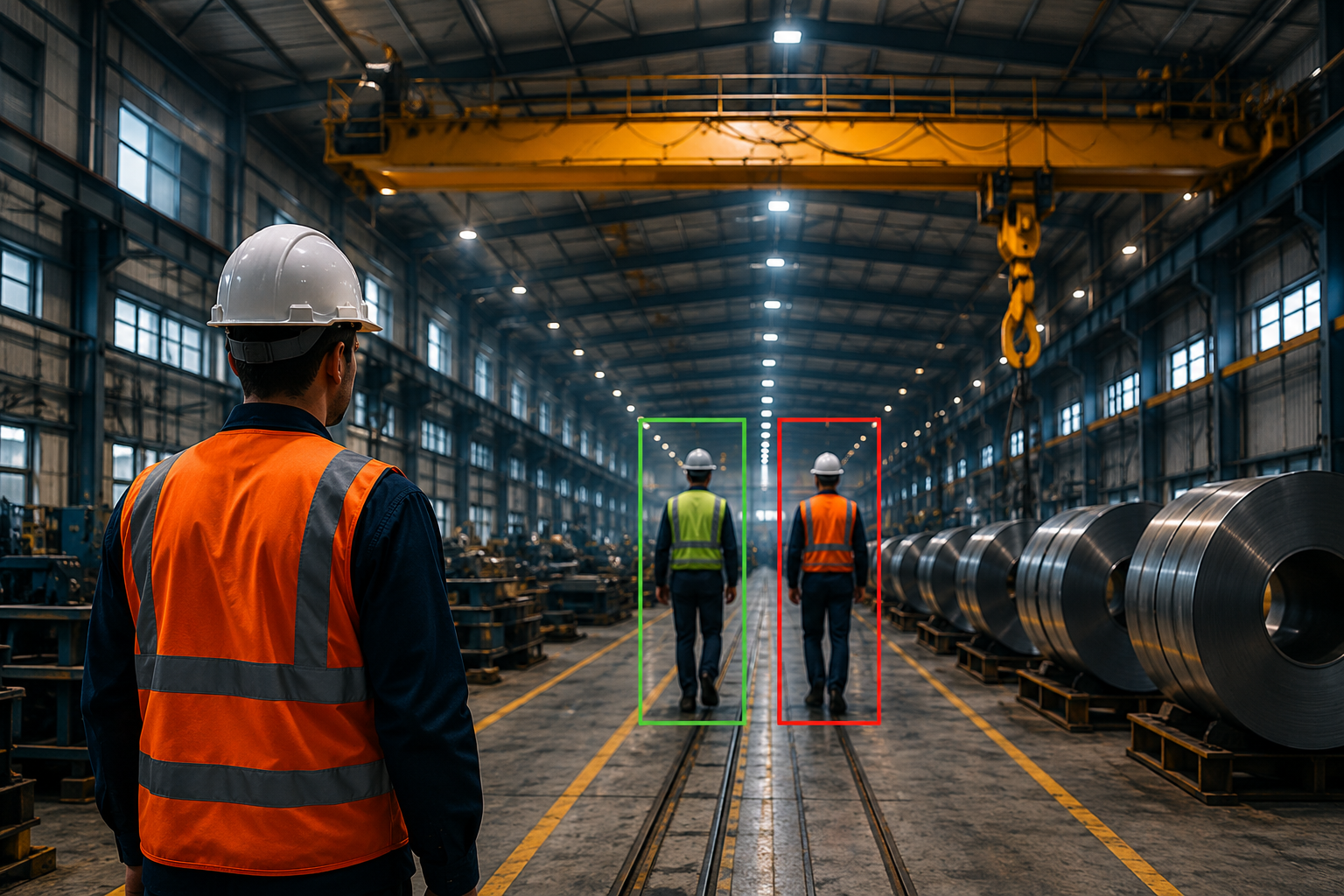
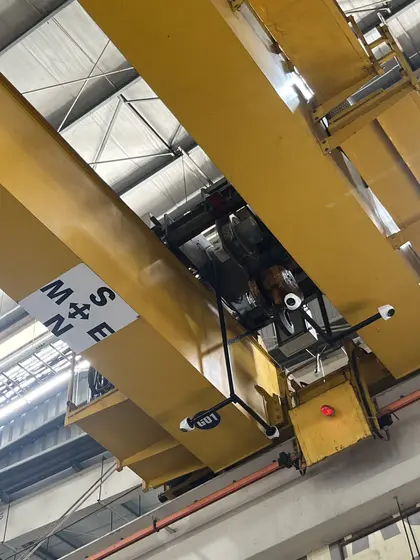
To improve safety in the overhead crane operating area, the factory deployed a real-time AI Camera monitoring system for the entire area beneath suspended loads. The AI Cameras were installed directly on the overhead crane and moved synchronously with the equipment, enabling continuous monitoring, reducing blind spots, and detecting people entering hazardous zones early in order to send immediate alerts to the control center.
SOLUTION HIGHLIGHTS
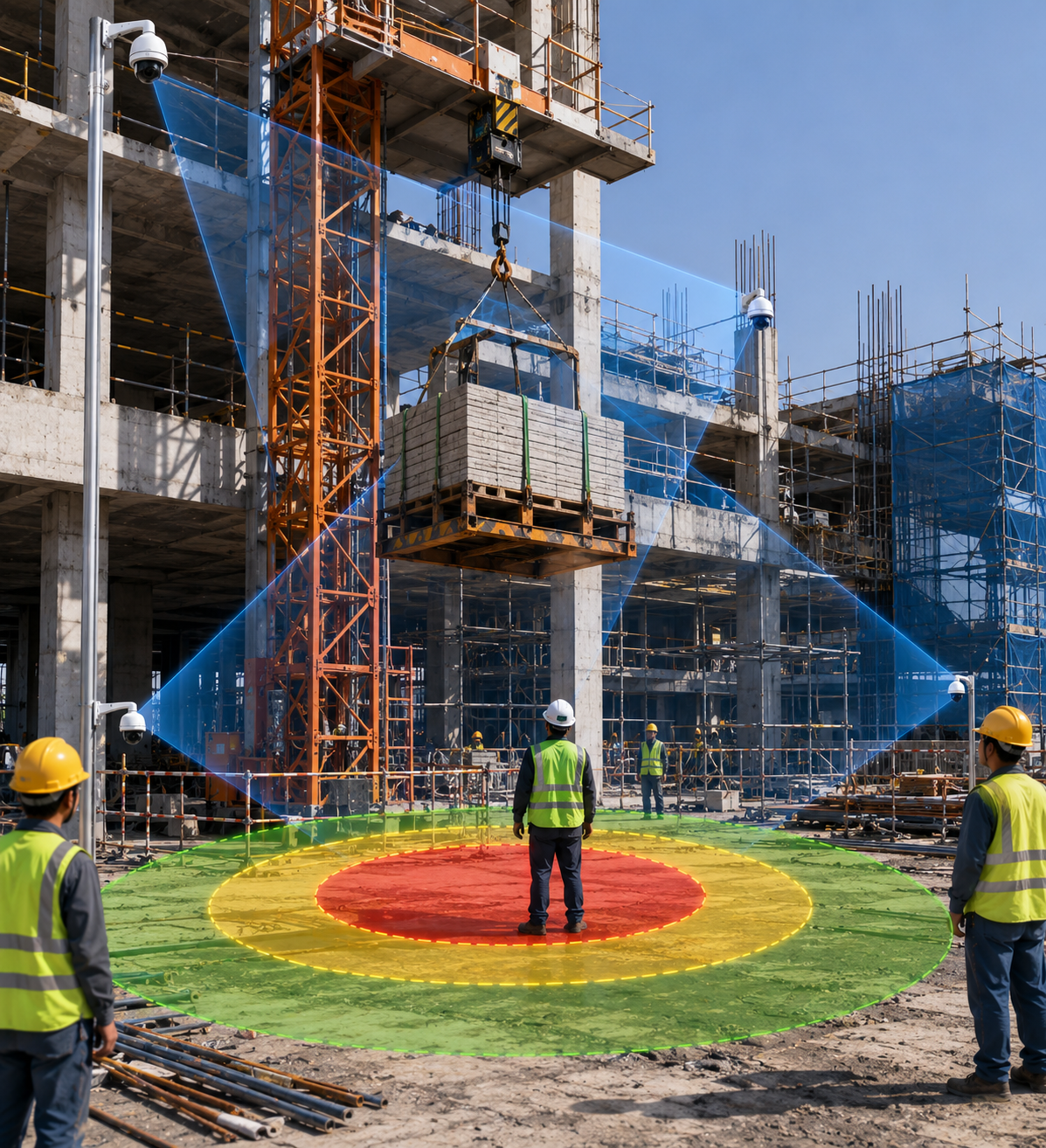
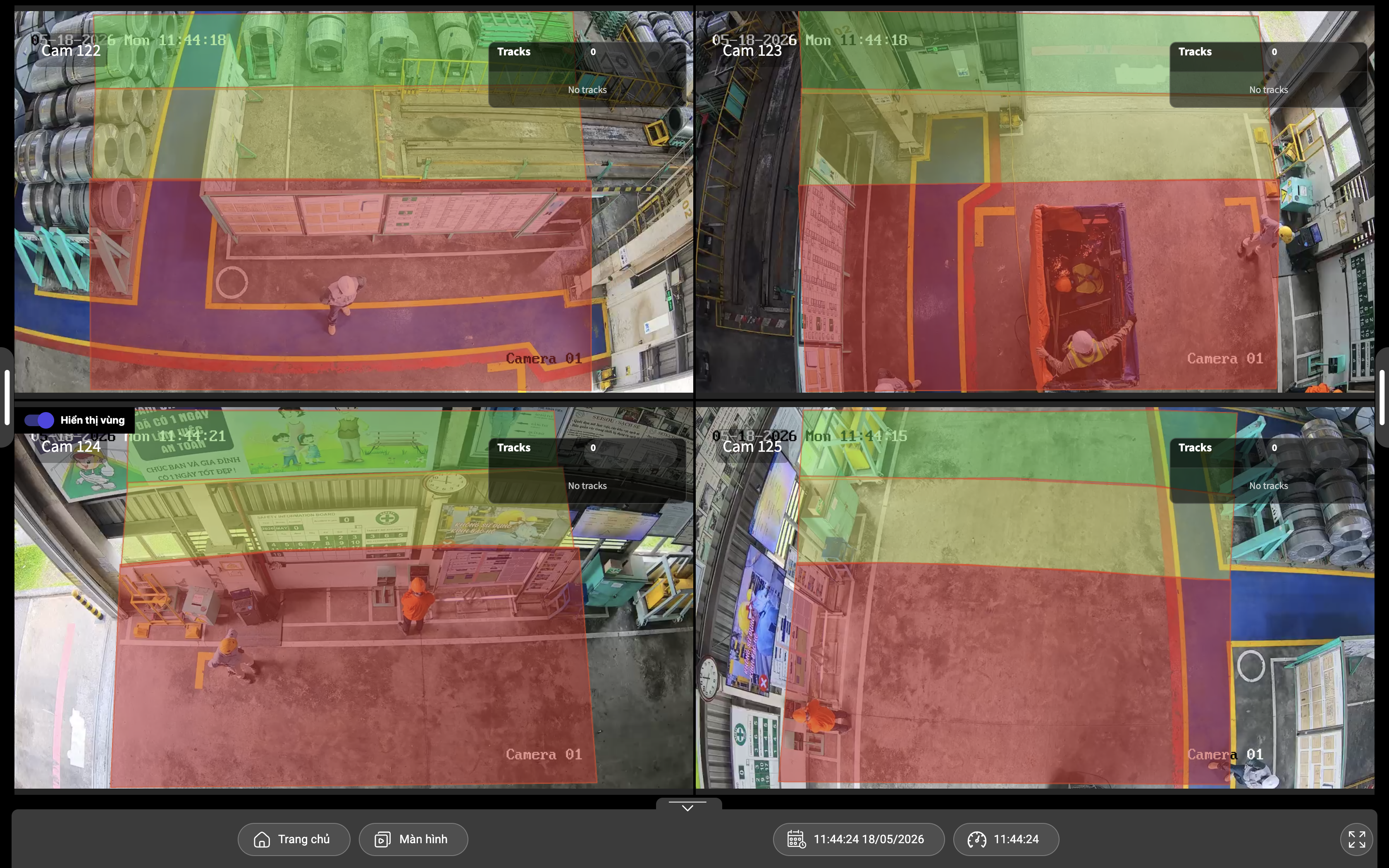
- Installation of 4 AI Cameras covering 4 directions beneath the overhead crane
- Cameras moving synchronously with the crane during operation
- Continuous monitoring of the entire area beneath suspended loads
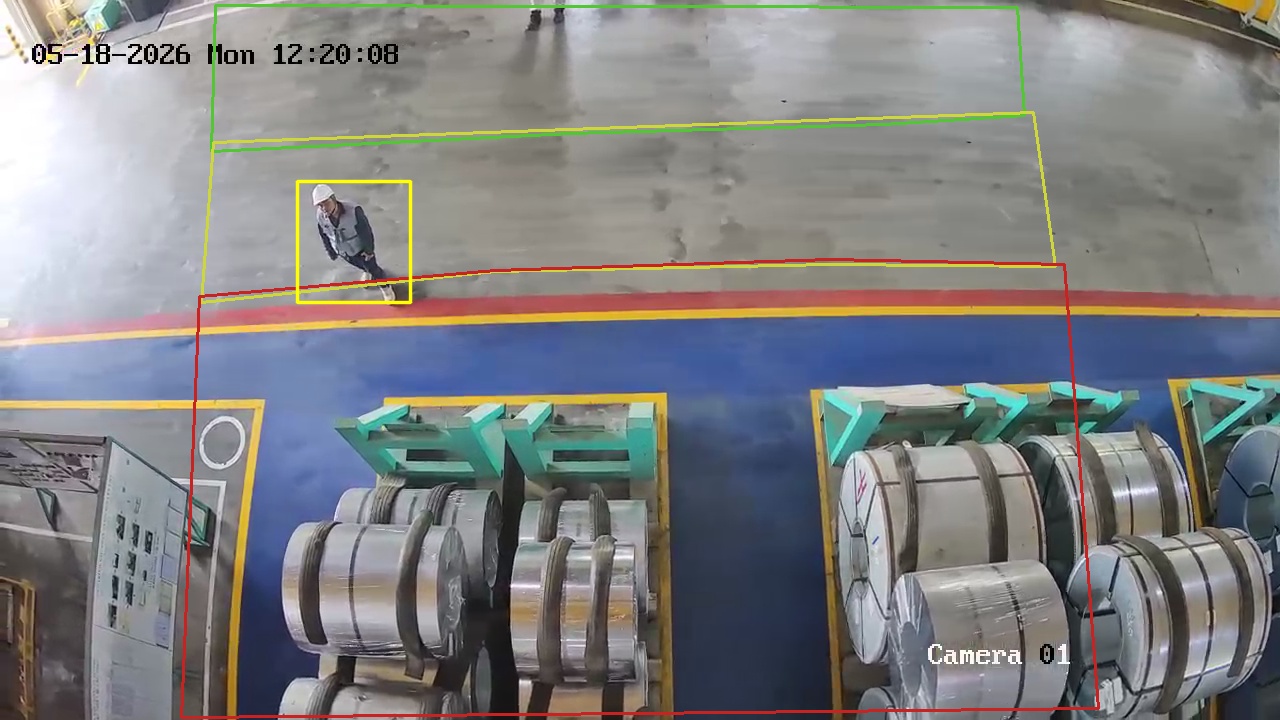
- AI automatically creating hazardous warning zones around steel coils
- Multiple warning levels based on danger zones
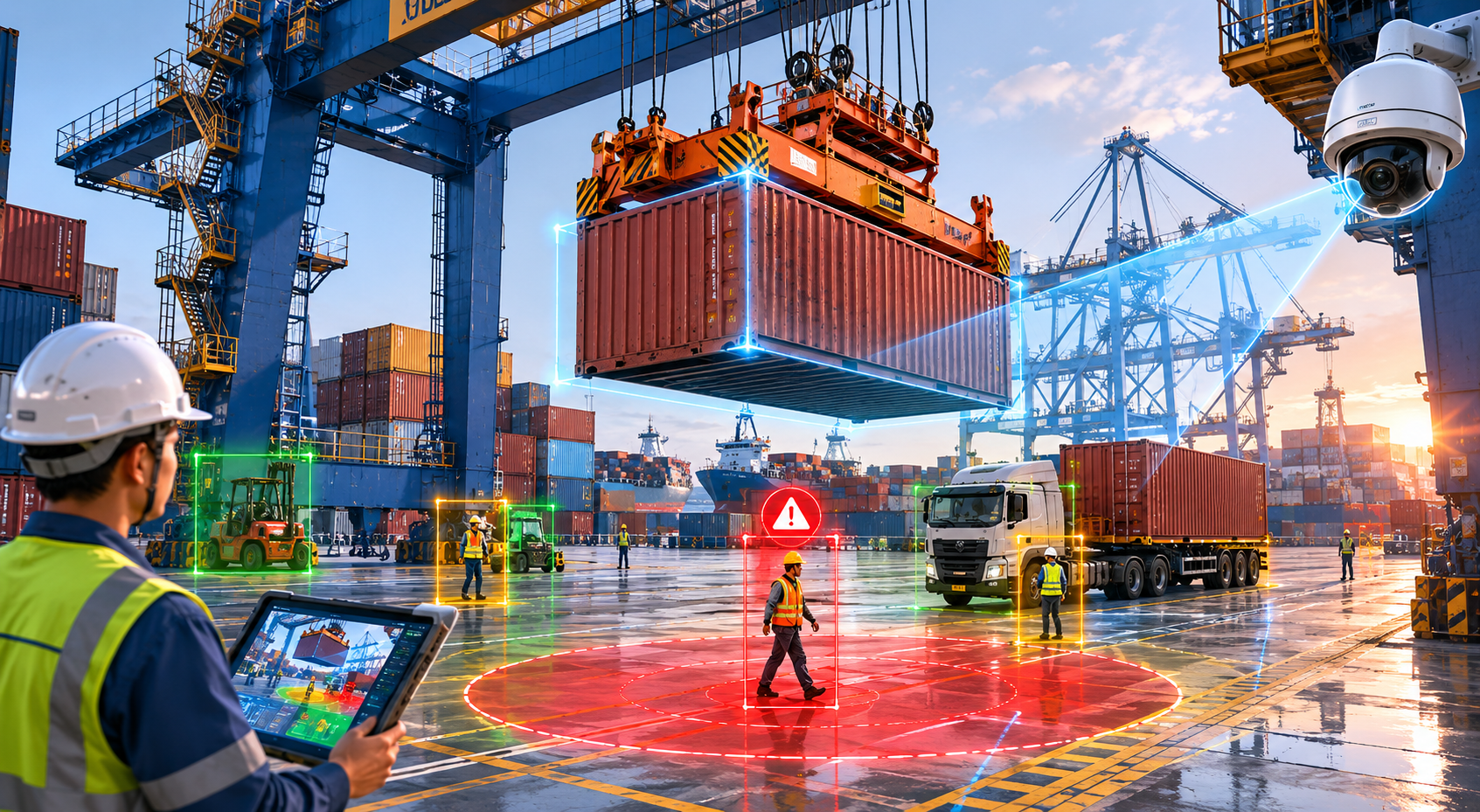
- Real-time alerts when people enter hazardous areas
- Enhanced operational safety and on-site response capability
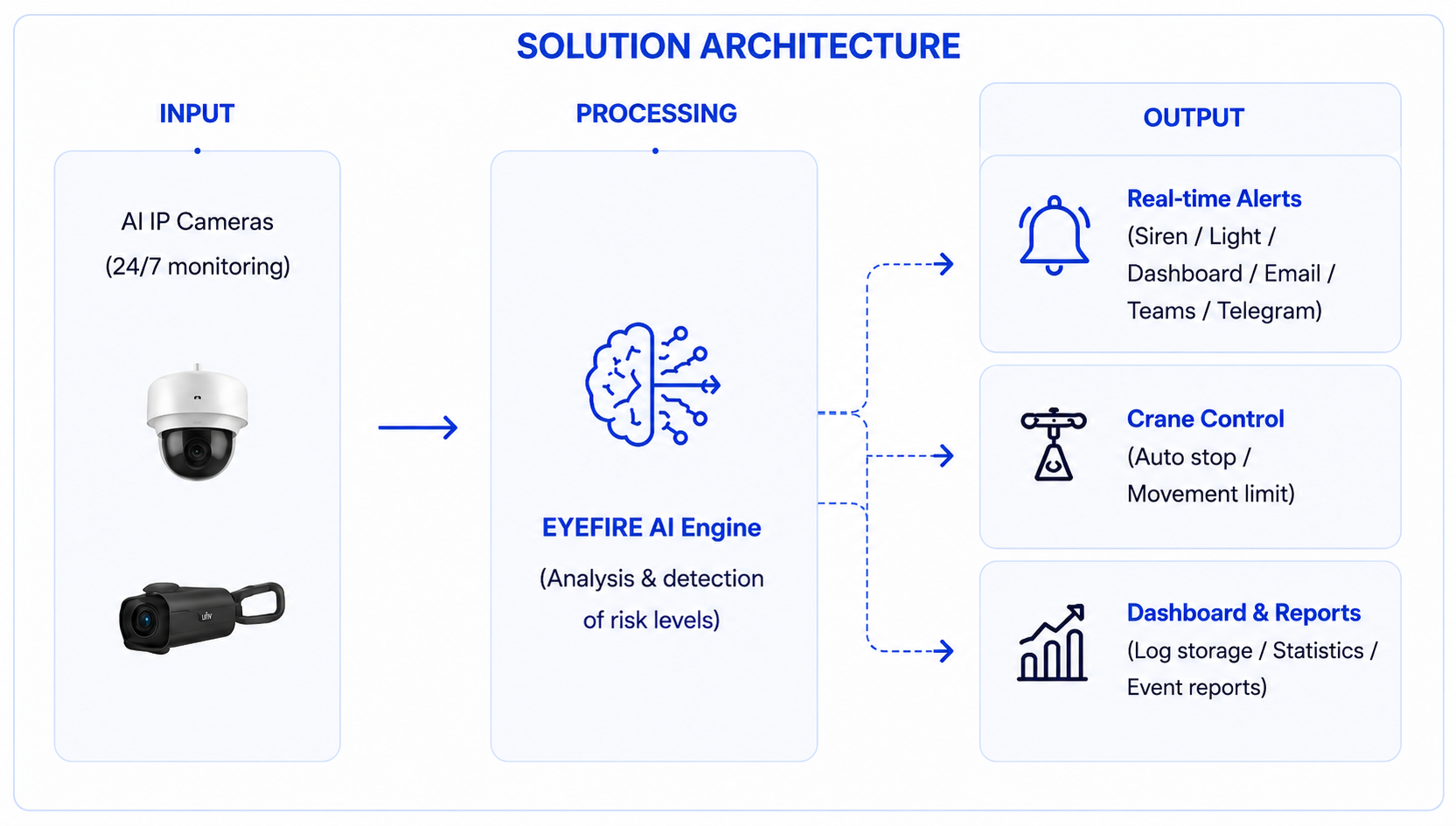
SOLUTION ARCHITECTURE
HOW IT WORKS
Cameras capture real-time video feeds
Data is transmitted to the AI Hub
The AI Engine detects people within hazardous zones
The system generates alerts based on warning levels
Signals are sent to the control system
The factory performs automatic crane control or operational warnings
OUTCOMES
reduction in lifting equipment-related accidents
reduction in maintenance costs
increase in operational efficiency
KEY OUTCOMES
- Reduce dependence on manual monitoring
- Continuously monitor areas beneath overhead cranes 24/7
- Increase response speed when hazards are detected
- Support remote overhead crane operations
IN PRODUCTION
EXPANDED APPLICATIONS